

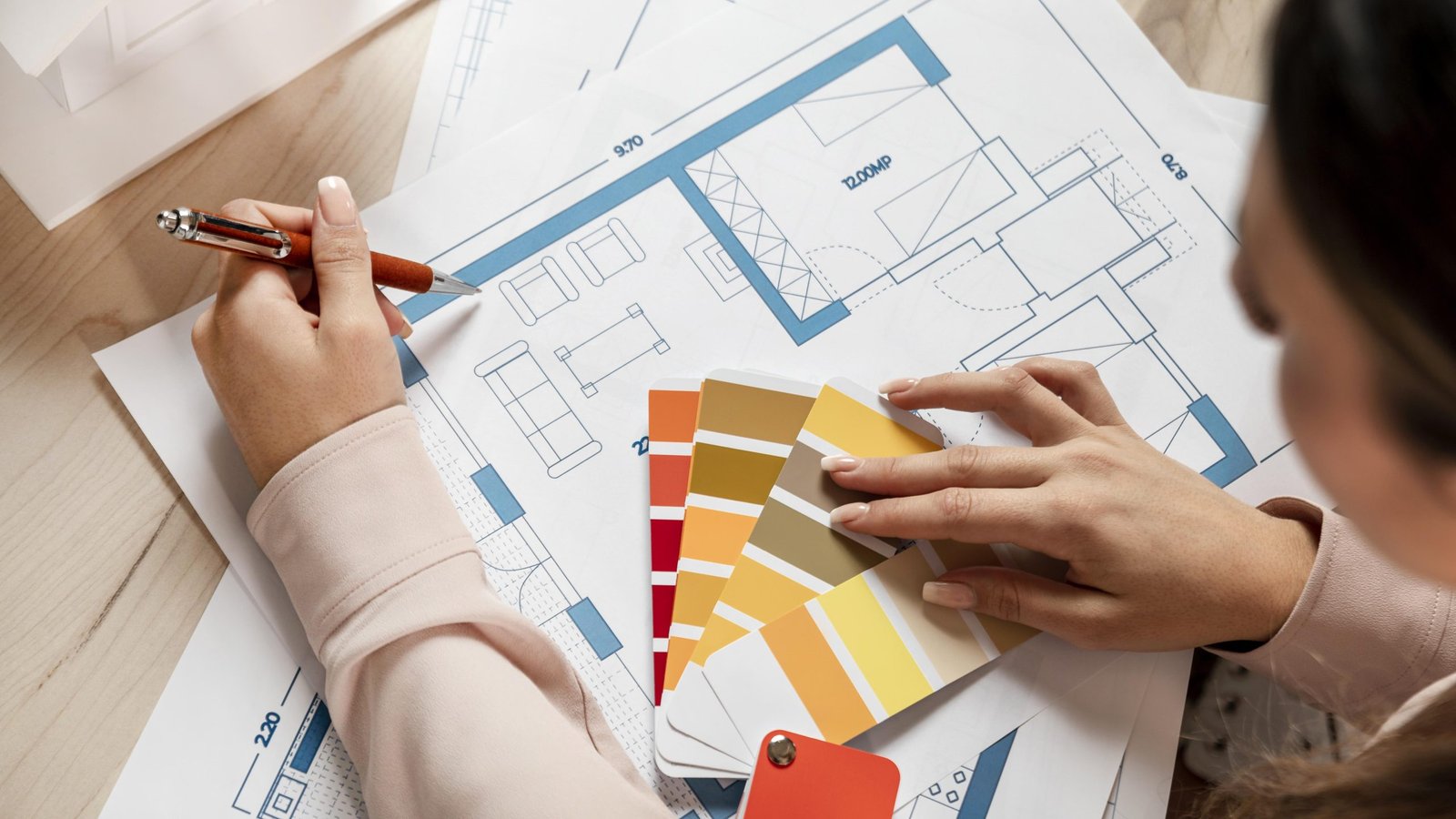
The idea of transforming a blank, outdated, or inefficient space into a dream home or a perfectly functioning environment is exciting. Yet, many people feel overwhelmed by the complexity of the process. They see only the beautiful “after” photos, not the structured work that made it possible. As the saying goes,
“The process of designing is way more than just designing.”
This is why understanding the interior design process is crucial. It’s not simply about making aesthetic choices; it’s a rigorous, seven-step approach to problem-solving that ensures functionality, controls the budget, and manages the timeline. A structured process sets realistic expectations, facilitates clear communication, and transforms ambitious visions into tangible, high-quality results.
Studio Kimi has broken down the process into easy-to-understand chunks for non-designers to grasp what an interior designer goes through to create amazing spaces.
What Is The Interior Design Process?
The interior design process is much more than just decorating or selecting furniture. It is a structured, systematic approach to problem-solving that ensures the creation of functional, aesthetically pleasing, and safe environments. At its core, the goal is not merely to make a space beautiful, but to fundamentally improve how people live and work within that space.
Why Follow A Structured Process?
- Clarity and Organisation – The process breaks down complex, potentially multi-million dollar projects into manageable, clear steps.
- Budget Control – It prevents costly mistakes and surprises by requiring detailed approvals at every stage (Phases 3 and 4), keeping projects on budget.
- Better Communication – Clear milestones and deliverables ensure clients, designers, and contractors are always aligned.
- Quality Results – Ensures no detail is overlooked, from structural requirements (Phase 4) to the final styling (Phase 6).
- Accountability – Defines clear roles and deliverables at each stage for all parties involved.
The Non-Linear Reality Of Design
While we define seven phases sequentially, the process is often iterative. It’s crucial to understand that design is not always a straight line. For instance, strong client feedback in Phase 3 might require revisiting the concept and materials from Phase 2, or an unexpected site condition in Phase 5 (Construction) might force a quick re-design of a millwork detail from Phase 4. This flexibility within a structure is normal and is the hallmark of good project management.
Different Types Of Interior Design Services & Which Is Right For You?
The designer’s process can be customised based on your needs, budget, and project scale.
| Service Model | Description | Best Suited For |
| Full-Service Design | Comprehensive, hands-on management from Phase 0 through Phase 6. The designer manages sourcing, procurement, contractor coordination, and installation. | Large renovations, new construction, or clients who want a completely turn-key experience. |
| E-Design/Virtual Design | Remote service relying entirely on digital communication and 3D visualisation. Deliverables are digital, and the client manages the procurement and installation. | Single room refreshes, budget-conscious clients, or those needing guidance outside a designer’s geographic area. |
| Design Consultation Only | Hourly or flat-fee advice for specific tasks (e.g., colour palette selection, floor plan review, material sourcing guidance). | DIY clients who need professional advice on a limited aspect of their project. |
Project Type Differences
- Residential vs. Commercial Design – The process differs primarily in its goals. Residential design is driven by emotion, personal aesthetics, and lifestyle, with concepts often leading the process. Commercial design (retail, office, hospitality) is driven by functionality, return on investment (ROI), capacity, and strict codes, often requiring space planning to be finalised before aesthetic concept work begins.
- Budget-Friendly Options – Designers often offer scaled-down services (like Consultation Only) for different budgets, demonstrating that professional guidance is accessible for various investment levels.
The 7 Phases of Interior Design
Phase 0 – Research & Discovery
Before a single sketch is drawn or a colour is chosen, a professional design process begins with a rigorous period of research. This phase is often invisible to the client, but it’s arguably the most critical for success. As experienced designers know, “Research is crucial, spend months if needed” to truly understand the project’s unique requirements.
What Happens in This Phase:
- Critical Analysis of Existing Designs – The designer studies similar spaces, both successful and unsuccessful, to understand precedents and, most importantly, what mistakes to avoid. They critically analyse function and efficiency, not just aesthetics.
- Site Visits and Observation – The designer observes the project’s physical location, taking note of its architectural context, natural light, surrounding environment, and potential constraints.
- Case Study Analysis – Deep-diving into research for the specific type of space (e.g., a home office, a restaurant, a multi-generational home) to understand optimal functionality. This phase addresses the concept: “The fact that you are an architect or a designer does not mean that you are familiar with all types of spaces.”
- Project-Specific Research – This involves specialised investigation based on client goals, such as researching regional building codes, deep-diving into the supply chain for sustainable materials, or analysing specialised equipment needs.
- Hand-Drawn Observation Sketches – Quick, non-aesthetic sketches to understand existing spatial relationships and potential traffic flow issues.
Why This Phase Matters:
This stage validates the time and effort investment by ensuring the final design is grounded in functionality and feasibility, not just fleeting inspiration. It moves the project beyond general knowledge and provides the necessary specialised expertise needed before concept development can begin.
Phase 1 – Initial Consultation and Programming
Phase 1 is where the designer and client officially meet and align. If Phase 0 was about researching the space type, Phase 1 is about researching the client. This deep dive ensures the final design reflects the client’s unique needs, not just a generic aesthetic.
What Happens in This Phase:
- Discovery Meeting – This is a crucial discussion where the designer learns about your vision, lifestyle, functional needs, and family dynamics. It includes a discussion of your preferred level of involvement, whether you want to approve every detail or delegate decisions.
- Quick Tip – Be honest about how you actually live in the space, not how you wish you did. This ensures maximum functionality.
- Site Analysis & Measurements – The designer conducts a thorough site visit (or a virtual consultation for e-design). This involves taking detailed measurements, photographing existing conditions, and assessing the structure and light quality.
- Needs Assessment – Going beyond aesthetics, the designer asks – Who uses the space, how often, and for what purpose? This is also the time to discuss aspirational goals, like incorporating sustainability goals (e.g., energy efficiency, non-toxic materials).
- Style Exploration – Discussing aesthetic preferences, likes/dislikes, and reviewing any inspiration images you’ve gathered.
Budgeting in This Phase:
Budgeting starts here and is the single most important factor in scope definition.
- Establishing Overall Project Budget – The client sets the maximum amount they are willing to invest in the entire project, including construction, design fees, furnishings, and accessories.
- Breaking Down the Budget – The designer helps break the total budget into preliminary categories to see if the vision aligns with the funds available (e.g., separating construction costs from furniture/decor costs).
- Contingency Fund – Crucially, a 10–20% contingency fund is established and reserved specifically for unexpected costs (e.g., uncovering unexpected damage during demolition). This prevents major budget surprises later on.
- Discussing Fee Structure – Defining the designer’s compensation, whether it’s an hourly rate, flat fee, percentage of project cost, or a hybrid model.
Key Deliverables:
- Project Scope Definition – A clear, written summary of what the project includes (and explicitly what it does not).
- Initial Site Measurements and Photographs.
- Client Questionnaire/Brief – The designer’s distilled summary of all client needs and desires.
- Preliminary Timeline and Budget.
Questions Clients Should Ask:
- What is included in your design fee? (e.g., just concepts, or documentation and administration too?)
- How do you handle changes to the scope once the contract is signed?
- What is your typical project timeline?
Duration – 1–2 weeks
Phase 2 – Concept and Schematic Design
This phase is the creative crucible where all the research and client programming transform into an actionable design direction. It’s often the HARDEST phase of the design process, requiring concentrated creativity to solve complex functional problems. However, it’s also where the project truly gains its identity.
The Creative Process – From Blank Canvas to Concept
Good design doesn’t happen by accident; it starts with focused ideation:
- Brainstorming Sessions – The designer begins by generating as many ideas as possible without judgment, the “white canvas” mentality.
- Word Association Exercises – Defining the space through adjectives (e.g., cosy, dynamic, streamlined), which serve as anchors for the visual mood.
- Using Design Principles as Tools – When creativity feels blocked, the designer reverts to fundamental principles like balance, proportion, rhythm, and contrast to systematically build the concept.
- Inspiration Through Observation – Ideas often come from outside the traditional design sphere, drawing inspiration from fashion, art, industrial design, or even nature.
The Three-Board Presentation System
Instead of just one mood board, designers often use a progression of visual tools to guide the client toward a final concept:
- Mood Board (Abstract) – Focuses entirely on feeling, vibe, and atmosphere. This board uses abstract imagery, colours, and textures, not literal interior photos, to communicate the emotional resonance of the concept.
- Concept Board (Semi-Concrete) – This introduces more specific elements like unique furnishings, millwork styles, or lighting fixtures. It uses vignettes and snippets of spaces, carefully avoiding showing entire room interiors, which can mislead clients into thinking the designer will copy the image exactly.
- Material Board (Tangible) – Often called the “sample board,” this brings the design to life with actual finishes, physical samples of flooring, tiles, hardware, and fabrics. This is a critical check for ensuring all elements coordinate and layer correctly.
These deliverables often utilise digital mood boards and initial AI rendering tools for a richer, modern presentation.
What Else Happens in This Phase:
- Preliminary Floor Plans – Initial space planning is finalised, showing furniture placement, traffic flow, and wall adjustments. For commercial projects, this step (ensuring capacity and efficiency) often precedes the conceptual aesthetic.
- Style Direction – Defining the overarching style (e.g., modern, transitional, wabi-sabi) and the general colour palette.
- Revised Budget – A budget update based on the level of finishes and custom items required by the approved concept.
The Importance of Schematic Design
This phase is the last chance for major changes without incurring significant costs. Client buy-in here ensures that the detailed work in the next phase is not wasted, solidifying both the functionality and the overall aesthetic direction.
Duration – 2–4 weeks
Wonderful! We are moving from the abstract concept to the concrete product.
Phase 3 – Design Development
In Phase 3, the aesthetic direction approved in the concept stage is meticulously translated into detailed, specified products and materials. This is where the budget is refined, and crucial decisions about quality, finish, and durability are finalised. Every element of the design is chosen, down to the exact sheen of the paint and the throw of the light fixture.
What Happens in This Phase:
- Detailed Specifications – The core task is specifying every item. This includes exact model numbers, manufacturers, finishes, and dimensions for all fixtures and materials.
- Refined Floor Plans – The preliminary layout is converted into finalised plans with exact dimensions for construction, ensuring everything fits perfectly (e.g., clearance around islands, minimum door widths).
- Elevations and Details – Drawings are created to show vertical surfaces, especially for built-ins, custom cabinetry, and intricate wall treatments, ensuring tradespeople know exactly how elements align and integrate.
- Lighting Design – Detailed plans are drawn up showing the placement of all electrical elements, including switches, outlets, and ensuring fixtures meet both aesthetic and functional lighting needs. This is also the time to plan for Smart Home Integration.
Key Selections Made in This Phase:
The choices made here are permanent and directly impact the project’s cost and final timeline.
| Category | Specific Selections | Criteria for Selection |
| Finishes | Paint colours (walls, trim), flooring (hardwood, tile, carpet), wall treatments, and window treatments. | Durability, maintenance, sustainable material selection (low-VOC, recycled content). |
| Fixtures | Lighting (chandeliers, recessed, sconces), plumbing (faucets, sinks, tubs), hardware (cabinet pulls, hinges, door handles). | Functionality, water efficiency, finish quality, and lead times. |
| Custom Elements | Detailed cabinetry design (kitchen, bathroom, built-ins), millwork profiles, architectural details. | Manufacturing constraints, budget adherence, and specialised functionality. |
Key Deliverables:
- Detailed Floor Plans and Elevations
- Lighting and Electrical Plans
- Material and Finish Schedules – Comprehensive lists detailing every surface and product.
- Custom Cabinetry Drawings
- Fixture Cut Sheets and Specifications – Technical documents for tradespeople.
- Updated Budget – A final, highly accurate budget reflecting the actual cost of specific selections.
Duration – 3–6 weeks
Fantastic! The detailed decisions are now set, and it’s time to communicate those intentions clearly to the build team.
Phase 4 – Construction Documentation
This is the phase where the design becomes a technical manual. Construction Documentation is the set of legal, technical drawings and written instructions that enable contractors to accurately quote the job, secure permits (Municipal and Provincial requirements), and build the space exactly as intended. It is the contract between the designer and the construction team.
What Happens in This Phase:
- Technical Drawings – The designer or architect creates detailed, dimensioned drawings that clearly illustrate every component of the build.
- Modern practices include digital documentation and sometimes BIM (Building Information Modelling), which enhances accuracy and coordination across trades.
- Specifications Writing – Creating detailed, written descriptions of all materials, installation methods, and quality standards. This ensures that the chosen products are installed correctly.
- Permit Applications – Compiling the necessary documentation, plans, and drawings for submission to local authorities to secure required building permits (from Building codes (e.g., Ontario Building Code, BC Building Code) are provincial, not federal) (if necessary).
- Bidding Documents – Preparing comprehensive packages that contain the drawings, specifications, and bidding instructions for contractors to review.

Types of Documents Created:
These documents move beyond simple floor plans to convey complex building information:
- Dimensioned Floor Plans – The primary layout showing exact measurements for walls, openings, and built-ins.
- Reflected Ceiling Plans – Showing the layout of lighting fixtures, ceiling treatments, and vents as they appear looking up.
- Electrical and Lighting Plans – Detailed placement of switches, outlets, and specialised wiring.
- Elevations – Interior walls shown in detail, often including tile patterns, millwork heights, and fixture placement.
- Detail Drawings – Magnified views of complex custom elements, like built-in benches or special material transitions.
- Finish Schedules – Tables summarising every finish material (paint colour, flooring, tile, grout) and its specific location.
The Tender Process:
Once the documentation is complete, the project moves to tender (or bidding).
- Distribution – The complete drawing and specification sets are sent to 3–5 qualified contractors.
- Site Meetings – Contractors conduct site visits to understand the scope and ask technical questions.
- Bid Review – The designer reviews the submitted bids with the client, comparing quotes line-by-line to ensure all contractors included the exact same scope and materials.
- Selection – The client selects the contractor based on price, quality, timeline, and professional compatibility, culminating in a signed construction contract.
Key Deliverables:
- Complete Construction Drawing Set (CD Set)
- Detailed Specifications Manual
- Tender Process or Request for Proposals (RFP) and comparison matrix
- Signed construction contract
- Final project budget (confirmed with contractor’s price)
Duration – 3–4 weeks
Phase 5 – Construction Administration and Project Management
This is the execution phase, the longest and most variable part of the process. During Construction Administration (CA), the designer acts as the client’s representative, quality controller, and central problem-solver, ensuring the construction aligns precisely with the approved technical drawings and specifications.
What Happens in This Phase:
- Pre-Construction Meeting – A mandatory kickoff meeting reviewing the drawings, specifications, and project timeline with the entire team (contractor, designer, client, key trades).
- Regular Site Visits (CA) – The designer conducts planned site visits during key milestones (e.g., framing, rough-in, drywall close) to review work in progress and ensure the quality and installation match the plans.
- Coordination and Communication – Managing all information flow. This includes using project management software to provide real-time updates, track timelines, and streamline communication between the contractor, vendors, and the client.
- Problem-Solving – Construction rarely goes perfectly. The designer addresses questions from tradespeople, resolves unexpected site conditions (like structural surprises), and makes prompt field decisions to keep the project moving.
- Procurement Management – Sourcing, ordering, tracking, and coordinating the delivery of all furniture, fixtures, and decor items specified in Phase 3.
- Change Orders – Any modification to the original scope or contract price must be formally documented and approved by the client using a change order, maintaining tight budget control.
Designer’s Role During Construction:
The designer’s presence is crucial to safeguarding the client’s investment and the design integrity:
- Clarify drawing details for contractors.
- Review shop drawings (detailed drawings created by the fabricator, e.g., for cabinetry).
- Track furniture and fixture deliveries, often coordinating their storage until the final installation date.
- Keep the client informed of progress, budget adherence, and any necessary schedule adjustments.
Typical Construction Milestones:
The designer oversees the contractor through a standard sequence of events, ensuring quality at each checkpoint:
- Demolition
- Rough Framing and Structural Work
- Rough Mechanical [Plumbing, Electrical, HVAC runs (e.g., Passive House standards are popular)]
- Insulation and Drywall
- Finish Carpentry and Cabinetry Installation
- Painting
- Finish Mechanical (Fixture installation, plumbing trim)
- Flooring Installation
- Final Trim and Touch-ups
Duration – 6–16 weeks (Varies greatly by project scope and complexity)

Phase 6 – Installation, Styling, and Final Touches
After months of planning, documentation, and construction, this phase is the rapid transformation from a job site to a finished, livable home. It’s often the client’s favourite part, as the space finally comes to life.
What Happens in This Phase:
- Furniture and Decor Installation – Coordinating the delivery and professional placement of all furnishings. This usually requires white-glove delivery service to ensure items are handled, unwrapped, and set up correctly.
- Designer-Directed Placement – The designer is on site, directing movers and installers according to the final plan. Some on-the-spot adjustments are often made for the optimal arrangement.
- Window Treatments – Installing curtains, blinds, or shades, which are critical for light control and adding softness to the room.
- The Art of Styling – This is the critical step that transforms a house into a home with emotional resonance. It involves:
- Hanging artwork and mirrors.
- Layering textures (throw pillows, blankets, rugs).
- Creating vignettes on surfaces (arranging books, decorative objects, and accessories).
- Incorporating plants and greenery (biophilic design).
- Final Cleaning and Punch List – The space receives a thorough professional cleaning. The designer and client then conduct a Final Walkthrough to identify any minor deficiencies (the “punch list”), such as paint touch-ups or adjustments to custom elements.
What to Expect During Installation:
While chaotic behind the scenes, the process is streamlined for the client. Professional movers and installers handle furniture placement, the designer directs every step, and all packaging materials are typically removed promptly, leaving the space clean and ready for use.
The Final Reveal:
- Scheduled Walkthrough – The client views the fully furnished and styled space.
- Documentation Handover – The client receives important documents, including care and maintenance instructions, warranty information for purchases, and touch-up paint specifications.
- Discussion of Future Planning – If the project is phased or if future updates are planned, the designer provides guidance.
- Photography Services – Professional photos are often taken at this stage, both for the designer’s portfolio and as a high-quality record for the client.
Key Deliverables:
- Fully furnished and styled space
- Care and maintenance instructions, warranty information
- Final project photos
- Touch-up paint and extra materials
Duration – 1–3 weeks
How Technology is Transforming the Interior Design Process
The interior design process, while fundamentally about space and people, is increasingly driven by digital innovation. Modern technology has streamlined communication, improved accuracy, reduced costly visualisation errors, and provided clients with an unprecedented look at their future space long before construction begins.
1. 3D Visualisation & Virtual Reality (VR)
This is perhaps the biggest game-changer for client understanding. Designers now move beyond flat plans and boards to create fully immersive experiences:
- Photorealistic Renders – Using software to create detailed, photorealistic 3D images of the proposed space, complete with specific textures, lighting, and chosen furnishings.
- Video Insight – Realistic renders prevent surprises and disappointment. Most clients cannot visualise complex spaces from floor plans or material boards alone. If there’s something they don’t like, the 3D render is the time to change it, not during construction.
- Virtual Reality Walkthroughs – For high-end projects, clients can put on a VR headset and literally “walk through” their designed home, experiencing the scale, light, and flow before any material is purchased.

2. AI in Design & Space Planning
Artificial intelligence (AI) is rapidly being integrated into design tools, making the process faster and more efficient:
- AI-Powered Rendering – AI helps accelerate the rendering process, making photorealistic visualisations more accessible and affordable.
- Space Planning Optimisation – AI tools can analyse spatial requirements and rapidly generate multiple layout options based on client parameters, assisting the designer during Phase 2 (Concept and Schematic Design).
3. Digital Documentation & BIM
In the technical phases (Documentation and Construction Administration), digital tools ensure precision and collaboration:
- Building Information Modelling (BIM) – This goes beyond simple 2D drafting. BIM creates an intelligent, 3D model of the building that contains all the information about the materials, fixtures, and structural components. This vastly improves coordination between the designer, architect, and engineers, reducing errors.
- Digital Specification – All selections made in Phase 3 are stored in cloud-based spec software, ensuring that model numbers, pricing, and quantities are always up-to-date and accessible by the construction team.
4. Digital Communication & Project Management
Modern project management tools keep complex projects organised and transparent:
- Client Portals – Designers use dedicated software to create a central hub where clients can review invoices, track the status of furniture orders, approve change orders, and view site progress photos in real-time.
- Real-Time Updates – These platforms ensure that everyone, client, contractor, designer, and vendors, is working from the most recent drawings and specifications, minimising confusion and delays.
5. Smart Home Integration
Planning for technology is now an intrinsic part of the process, particularly in Phase 3:
- Touchless Technology – Integrating systems that use voice activation, apps, or sensors for lighting, security, and climate control.
- Wellness Focus – Planning for technology that monitors and improves air quality, light exposure, and climate control, aligning with the growing focus on health and wellness.
Yes, incorporating Sustainability and Universal Design is vital for any modern design outline. These elements are no longer optional but essential ethical and functional requirements for most contemporary projects.
Sustainability and Universal Design in the Process
Today’s interior design process must address not only aesthetics and functionality but also long-term environmental and social responsibility. This section focuses on designing spaces that are healthier for the occupants and the planet, while ensuring they are accessible to all.
1. Sustainable Material Selection (Phase 3 Focus)
Sustainability is integrated from the initial planning stages through to material procurement, addressing the fact that 43% of designers report their projects have specific sustainability requirements.
- Eco-Friendly Options – Designers prioritise materials that are recycled, renewable (like bamboo), or locally sourced to reduce transportation’s carbon footprint.
- Health and Wellness – A focus on low- and zero-VOC (Volatile Organic Compounds) paints, finishes, and furnishings to ensure superior indoor air quality. This includes using non-toxic alternatives like plant-based finishes or vegan leathers.
- Durability and Lifecycle – Choosing durable, long-lasting materials and furniture to minimise the need for replacement and reduce construction waste. The goal is to move beyond temporary trends toward lasting investment.
- Waste Reduction Strategies – Planning during the demolition and construction phases to recycle salvageable materials and minimise landfill contribution.
2. Energy Efficiency Planning
Designing for long-term operational savings is key to a truly sustainable project:
- Envelope Considerations – Advising on high-performance windows, doors, and insulation to minimise heating and cooling needs.
- HVAC and Lighting – Selecting energy-efficient HVAC systems, specifying Energy Star appliances, and utilising LED lighting systems, often connected to smart home controls (Section VII) for optimised use.
- Natural Light and Biophilic Design – Maximising daylight exposure (reducing the need for artificial light) and incorporating natural elements (plants, natural textures) to connect occupants with nature, which is central to a wellness focus.
3. Accessibility and Universal Design
A modern, ethical design process ensures the space can be used comfortably by people of all ages and abilities.
- Universal Design Principles – Applying design that works for the widest range of users possible without the need for adaptation. Examples include lever-style door handles, easy-to-use drawer pulls, and varied countertop heights.
- Ageing-in-Place Considerations – Planning for long-term needs, which is especially important in residential design. This might involve curbless showers, adequate manoeuvring space, and structural reinforcement for potential grab bars.
- Accessibility Requirements: For commercial and public projects, ensuring strict adherence to Provincial and Municipal Accessibility Requirements and Building Codes (e.g., the Ontario Building Code, the BC Building Code). This governs necessary standards for ramps, clearances, fixture heights, accessible washrooms, and signage to ensure the space is usable by people of all abilities.
- Certifications – Briefing clients on the benefits and requirements of pursuing advanced sustainability certifications like Passive House or Green Globes standards, or the WELL Building Standard.
Working Relationship Dynamics & Expectations
The success of an interior design project depends as much on the quality of the relationship as on the quality of the design. A great outcome requires trust, open communication, and clearly defined roles between the designer and the client.
1. Designer-Client Compatibility
Finding the right designer is similar to finding any trusted professional; compatibility is essential.
- Communication Styles – Discussing and agreeing on the preferred method and frequency of communication upfront (e.g., email for official decisions, quick texts for emergencies).
- Trusting the Expertise – While the client lives in the space and knows their needs best, they must also trust the designer’s expertise in construction, problem-solving, and budget allocation.
- Handling Disagreements – A healthy process includes a mechanism for when the client and designer don’t align. Good designers welcome honest feedback, and often, revisiting the original Phase 2 concept boards or design principles can help refocus and reach a solution.
2. Setting Communication and Decision Timelines
Clarity on who decides what, and when, prevents bottlenecks and delays throughout the project.
- Decision-Making Timeline – Clients should understand that fast decisions are crucial, especially during Phase 3 (Design Development). Delays in approving fixtures or materials can push back ordering, which, due to supply chain issues, can halt construction for weeks.
- Responsive Communication – Both parties must agree on expected response times for questions and requests. Delays from any party affect the overall schedule and budget (Phase 5).
- Family Dynamics – If multiple decision-makers are involved (e.g., partners, committees), defining a single point of contact for the project simplifies communication and prevents conflicting instructions.
3. Client Involvement Levels
The designer must confirm how involved the client wishes to be, as this impacts the project management style:
- Hands-On Client – Needs to approve every textile, fixture, and colour sample.
- Hands-Off Client – Prefers to delegate direction after approving the initial concept, trusting the designer to execute the details autonomously.
The Interior Design Costs & Investment
A successful project requires a transparent understanding of where your money is going. The investment in an interior design project encompasses two main categories:
- The Designer’s Fee (for time, expertise, and management)
- The Project Costs (for all materials, construction, and furnishings).
Designer Fee Structures
Designers use several models to charge for their services. The model chosen often depends on the project scope and the level of service provided.
| Fee Structure | Description | Best Suited For |
| Flat Fee | A single, fixed price for the entire scope of work, based on the estimated time and complexity. | Full-service design, whole-home projects, or new construction where the scope is well-defined. |
| Hourly Rate | Billing based on the time actually spent on the project (design, meetings, sourcing, site visits). | Smaller projects, single-room refreshes, or design consultations where the scope is flexible or limited. |
| Percentage of Project Cost | The fee is calculated as a percentage (e.g., 10–20%) of the total budget for construction and furnishings. | Large-scale, high-budget projects where the scope and material costs are high. |
| Hybrid Model | A combination, such as a fixed fee for the design phase (Phases 1-4) and an hourly rate for construction administration (Phase 5). | Most common for renovations, offering predictability and flexibility. |
What’s Included vs. What Costs Extra
It’s vital to clarify what the design fee covers versus what the client pays separately:
- Included – Design time, concept creation, space planning, drawing creation, specification sourcing, and project management time.
- Costs Extra (Client pays directly) – All physical materials, fixtures, furniture, contractor labour, contractor markup, purchasing fees/markups on items, freight/shipping, installation costs, and taxes.
- Taxes – Budgets must account for GST/HST (Goods and Services Tax / Harmonised Sales Tax), which varies by province, and is applied to materials, fees, and labour.
- Cross-Border Sourcing – If discussing sourcing materials or furniture from the US, add a quick note about accounting for Customs Duties, Tariffs, and Brokerage Fees, as these can significantly impact the budget (Hidden Costs to Anticipate).
Cost Control and Maximising Budget
- How to Maximise Your Budget – The designer helps prioritise. They know where to splurge (e.g., permanent fixtures like high-quality cabinetry or plumbing that impact daily function) vs. where to save (e.g., less expensive accessories or off-the-shelf lighting).
- Payment Schedules – Payments are typically phased and tied to deliverables (e.g., 50% retainer at contract signing, payments due upon approval of concept, documentation, and the final instalment at completion).
Hidden Costs to Anticipate
Good budgeting accounts for potential unexpected expenses:
- Permits and Fees – Costs associated with local building permits and inspections.
- Structural Issues – Unforeseen problems found during demolition (e.g., mould, outdated wiring, structural damage) that require immediate remediation. This is why the 10–20% contingency fund is essential.
- Disposal Fees – Costs for removing large amounts of construction debris and waste.
- Expediting Fees – If a critical item needs to be delivered faster than standard lead times, a premium must often be paid.
Red Flags to Watch For In The Interior Design Process
The interior design process, though structured, involves significant financial investment and reliance on various professionals. Knowing the warning signs can help you prevent major headaches, budget overruns, and project failure.
Designer Red Flags
These relate to the professionalism and reliability of your design partner:
- Unclear Contracts or Fees – Refusal to clearly define the scope, process, or fee structure in writing. If the contract is vague, you lack protection.
- No References or Portfolio – A lack of demonstrable, successfully completed projects, or an unwillingness to share contact information for past clients.
- Skipping Crucial Phases – Promising to skip foundational steps like Phase 0 (Research) or Phase 4 (Documentation) to save time. This nearly always leads to costly mistakes during construction.
- Promises That Sound Too Good – Unrealistic guarantees about timelines, budgets, or material lead times that don’t align with industry standards.
Contractor Red Flags
The contractor manages the physical build, making their credentials vital:
- Unlicensed or Uninsured – Never hire a contractor without proper licensing and comprehensive liability insurance. This protects you financially if accidents or damage occur.
- “Cash-Only” Deals – A demand for cash payments or a refusal to use a formal, detailed contract. This often indicates poor business practices or attempts to avoid taxes/oversight.
- Lack of Clear Communication – Unwillingness to participate in site meetings or a lack of responsiveness to questions from the designer.
Project & Process Red Flags
These indicate the project itself is off track:
- No Written Documentation – Decisions, changes, or budget approvals are only made verbally. Always require documentation in writing.
- Rushing Decisions – Pressuring you to make choices about materials or fixtures without adequate time to review samples or understand the cost impact.
- Constant Change Orders – If the project is generating weekly, unbudgeted change orders (after the initial budget was set), it suggests the initial planning (Phase 4 Documentation) was flawed, or the contractor is disorganised.
- Missed Deadlines Without Communication – Delays are normal, but they must be proactively communicated, explained, and accompanied by a revised schedule.
How Long Does the Entire Interior Design Process Take?
One of the most common client questions is also the hardest to answer – How long will this take? While the six structured phases may seem fast on paper, the entire process, from initial research to final installation, can span months or even years. The truth is, good design takes time, and the duration depends heavily on the project’s scale and complexity.
Typical Timeline by Project Type
These ranges are approximations and assume a smooth process with timely client decisions:
| Project Type | Typical Timeline (Start to Finish) | Key Factors Influencing Duration |
| Single Room Refresh | 2–3 months | Primarily sourcing furniture and ordering decor. |
| Kitchen or Bathroom Renovation | 4–6 months | Documentation, permitting, and coordinating multiple trades. |
| Multiple Room Renovation | 6–9 months | Structural work, extensive custom cabinetry, and longer lead times. |
| Whole Home Design/Build | 9–18 months | High number of custom elements, extensive construction administration. |
| New Construction | 12–24 months | Coordination with the architect, general contractor, and permitting hurdles. |
Factors That Affect Timeline
Understanding these variables helps clients manage their expectations and reduce frustration:
- Project Scope and Complexity – The sheer number of rooms, the amount of custom millwork, and the complexity of the technical drawings directly increase the time required for Phases 3 and 4.
- Custom Elements and Lead Times – Custom-made furniture, cabinetry, or speciality items (e.g., European fixtures) can have lead times of 12–20+ weeks. Post-pandemic supply chain impacts (Gap 10) have made these delays more common and unpredictable.
- Client Decision-Making Pace – Delays in Phase 2 (Concept Approval) or Phase 3 (Material Selection) directly translate into delays during Phase 5 (Construction).
- Permit Requirements – Securing local building permits (Phase 4) can add weeks or months, depending on the municipality and complexity of the project.
- Geographic Considerations:
- Local Building Codes – Regional requirements can necessitate drawing revisions and longer approval times.
- Material Availability – Relying on materials that must be shipped internationally will slow the process.
- Weather – For projects involving structural or exterior work, weather can cause unplanned downtime.
Tips For A Smooth Interior Design Process & Best Results
Navigating a complex interior design project is a partnership. By adopting a proactive and organised approach, clients can significantly contribute to keeping the project on time, on budget, and ensuring the final result exceeds expectations.
1. Before You Start – Preparation is Everything
The more information you provide in Phase 1, the smoother the rest of the process will be.
- Gather Inspiration – Create a dedicated folder (physical or digital) of inspiration images. Be sure to note what you like about each photo (e.g., “I like the colour palette,” not just “I like the room”).
- Define Needs – Make a clear list of must-haves (e.g., adequate storage, space for two remote workers) versus nice-to-haves (e.g., designer wallpaper, smart mirror).
- Be Realistic About Budget – Set a firm overall budget range, and be honest about it from the beginning. A designer can’t save you money if they don’t know the financial constraints.
- Measure Existing Items – If you plan to keep any existing furniture, measure it immediately. This ensures the designer can incorporate it into the new space plan during Phase 2.
2. During the Process – Stay Engaged and Decisive
Your responsiveness is the single biggest factor in controlling the timeline in Phases 2 and 3.
- Respond Promptly – Treat the designer’s questions and requests for approval as urgent. Delays in decision-making will inevitably delay ordering and push back the construction start date.
- Ask Questions When Unclear – Never approve a drawing, specification, or invoice if you don’t fully understand it. Ask for clarification on materials, costs, or technical details immediately.
- Trust and Advocate – Trust your designer’s expertise (they understand structure, scale, and function), but always advocate for your preferences (it is, after all, your home). It’s a balance.
- Document Everything – Ensure all critical decisions, especially those related to budget changes or modifications to the scope, are documented in writing (email, client portal, or formal change order).
3. For Best Results – Focus on the Long Term
To ensure the space truly functions for your life, keep these big-picture items in mind:
- Be Honest About How You Live – If you have pets, children, or a high-traffic lifestyle, share that information. The designer will choose durable, practical materials over delicate ones.
- View Samples in the Actual Space – Always try to view large material samples (paint swatches, tile samples) in the actual room, in various lighting conditions, before giving final approval. Colours change dramatically between daylight and artificial light.
- Consider Long-Term Needs – Design for flexibility. Think about future needs like ageing-in-place (Universal Design) or accommodating grown children, rather than just current wants.
- Remember, Good Design is an Investment – While the process involves significant cost, viewing the result as a long-term investment in your well-being, home value, and quality of life helps put the effort into perspective.
Why Work with a Professional Interior Designer?
Hiring a designer is an investment that yields returns in time, money, and quality.
- Expertise and Experience – Designers possess years of training in spatial planning, building codes, and material science. They know what works (and what doesn’t) and have access to trade-only resources and discounts often unavailable to the public.
- Time Savings – The designer handles the massive amount of research, sourcing, vendor negotiations, and coordination (Phases 3, 4, and 5), freeing the client from managing the chaos.
- Budget Management – A designer helps you prioritise spending, preventing costly mistakes and often saving clients money in the long run by ensuring materials are ordered correctly and avoiding unnecessary change orders.
- Stress Reduction – Serving as a single point of contact for contractors and vendors, the designer handles the inevitable project crises and problem-solving, offering peace of mind.
- Better Results – The outcome is a cohesive, highly functional space with thoughtful details and a professional polish that exceeds expectations.
Conclusion
The interior design process is a powerful journey built on structure, collaboration, and creativity. We’ve defined the seven essential steps – Research & Discovery, Consultation, Concept, Design Development, Documentation, Construction, and Installation.
While the path is rarely a perfect straight line, with necessary iterations and adjustments common, this comprehensive, structured approach is the key. It ensures that every detail, from the environmental impact (Sustainability) to the user experience (Universal Design), is meticulously planned and managed, often leveraging the power of technology to visualise and execute the final vision.
Good design is an investment in your lifestyle, your well-being, and your home’s value. By working with experienced professionals like Studio Kimi, you are not just purchasing new decor; you are investing in a seamless process that guarantees beautiful, functional, and well-executed results.
Ready to start your interior design journey? Contact Studio Kimi to begin transforming your space.


