

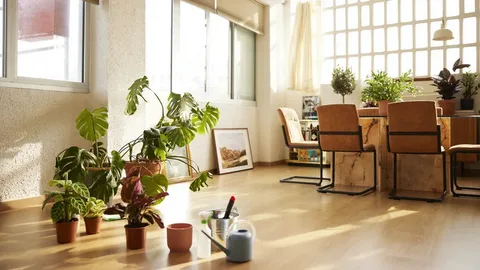
Having comfortable indoor environments relies on more than just technology; it also requires better design that supports the nature around. Understanding how air moves through a space and how temperature differences can be controlled allows your homes and workplaces to remain fresh and pleasant without relying entirely on mechanical systems.
Moreover, natural ventilation plays a significant role in improving air quality. Further, it helps regulate indoor temperature and supports energy efficiency when integrated into architectural design.
What are the Best Interior Natural Ventilation Strategies?
There are numerous natural ventilation strategies to consider for improved ventilation in your home or office. The three primary methods that deliver effective natural ventilation include cross-flow ventilation, stack ventilation, and thermal design.
Each ventilation strategy uses different physical and design principles to promote air movement. By exploring the mechanisms behind each approach, you can create comfortable indoor environments that suit your interior needs.
What is Cross-Flow Ventilation?
Cross-flow ventilation relies on wind pressure differences created when air enters through openings on the windward side of a building and exits on the leeward side. The air movement across a room promotes a continuous supply of fresh air and helps remove indoor pollutants, moisture, and excessive heat.
This strategy is especially effective when prevailing winds are predictable and can be channeled through aligned openings, such as windows or louvres, placed at low and high heights within the same space.
To achieve optimal cross-flow ventilation, it is essential to consider factors such as window orientation, opening sizes, and positioning. Large openings facing incoming wind and proportionate openings on the opposite side support efficient air exchange.
Incorporating adjustable casement or sash windows helps regulate airflow intensity while ensuring the path of air remains unobstructed by internal partitions or heavy furnishings, which enhances their effectiveness. In addition, careful attention to the window-to-wall ratio and providing good thermal envelope continuity contributes to both comfort and energy efficiency.
What is Stack Ventilation?
Stack ventilation relies on buoyancy forces that occur when warm air rises and exits through high-level openings, such as clerestory windows or roof vents. As warm air departs, cooler air is drawn in at lower levels through vents or window openings. This creates a natural vertical convection loop that effectively refreshes the indoor atmosphere while aiding in cooling during warmer periods.
Design principles for successful stack ventilation include providing high-level openings that are adequately sized and operable, and positioning them above the occupied zone to ensure warm stale air is removed before it reaches occupants. Lower-level inlet openings should be sized to balance the stack effect.
A well-insulated ceiling and roof prevent unwanted heat gains while enabling the differential temperature gradient that drives airflow. Incorporating features such as thermal chimneys or vented light wells enhances the stack effect by promoting stronger vertical movement, especially during periods of light wind.
What is Thermal Design Ventilation?
Thermal design seeks to moderate indoor temperatures by integrating passive strategies, such as shading, thermal mass, and insulation, together with natural ventilation. Although this approach does not rely solely on airflow, it supports and amplifies ventilation strategies by reducing heat gains and maintaining comfortable indoor conditions.
Effective thermal design includes the proper orientation of the building to minimize direct solar gain in summer while maximizing Natural light. Overhangs, brise-soleil, or deciduous planting shield windows from high summer sun and allow warming in spring or autumn. Thermal mass materials, such as concrete, brick, or stone, absorb excess heat during the day and release it at night when temperatures fall. When combined with nighttime cross-flow or stack ventilation, the stored heat is flushed out, resulting in a cooler interior by morning.
Moreover, insulation plays a crucial role in regulating heat transfer. A well-insulated envelope maintains a consistent comfort level and complements natural ventilation by reducing temperature extremes. Strategic window placement supports passive solar gain in cooler months while facilitating airflow during warmer seasons. All these elements work together in a balanced system that promotes comfort and energy savings without the need for active cooling.
Practical Considerations and Design Guidance
Embarking on natural ventilation design begins with understanding local wind patterns and seasonal temperature variations. Observing when breezes are most frequent and at what intensity informs the placement of openings and orientation of the building.
Window design should include user-friendly operable features. Casement windows with simple mechanisms support occupant control. Louvres and adjustable slatted systems offer fine-tuning of airflow while maintaining privacy and protection from rain.
Interior design planning matters too. Open-plan spaces facilitate airflow, while partitions may restrict it. Corridors aligned with window openings act as wind tunnels, promoting the distribution of air. In larger volumes, installing internal atria or light wells doubles as ventilation shafts, supporting stack strategies.
Maintenance is often overlooked but essential. Operable vents and windows should remain functional throughout the year. Filters or insect screens ensure air remains clean while preventing pests. Regular inspection of roof vents, chimneys, and flues ensures unobstructed airflow and safety.
What are the Benefits of Natural Ventilation?
Natural ventilation brings benefits beyond temperature control. Fresh air reduces indoor pollutant concentrations and helps regulate humidity, creating healthier indoor environments. This can alleviate respiratory issues, reduce the risk of mould, and support occupant well-being.
Moreover, the opportunity for occupants to engage actively with their comfort promotes better health. Simple acts, such as opening a window, tie occupants to the rhythm of the weather and season, cultivating a subtle awareness of comfort and personal agency.
Conclusion
Natural ventilation strategies offer elegant, energy-conscious solutions to indoor comfort when thoughtfully designed. Cross-flow ventilation harnesses wind pressures through paired openings. Stack ventilation utilises buoyancy to draw warm air away while simultaneously drawing in fresh air. Thermal design supports these by moderating heat through shading, thermal mass and insulation. Embracing these strategies in combination delivers comfortable, healthy, and sustainable interiors.
By paying attention to the environment around you, building orientation, window and vent desig,n and the lifecycle of the building envelope, you can achieve living and working spaces that provide excellent ventilation.
You can achieve a completely different look for your house or office by hiring professionals from Studio Kimi, who specialise in the art of excellent interior design and home renovation, offering you spaces with natural ventilation to improve your health and comfort while reducing reliance on mechanical cooling systems.


