

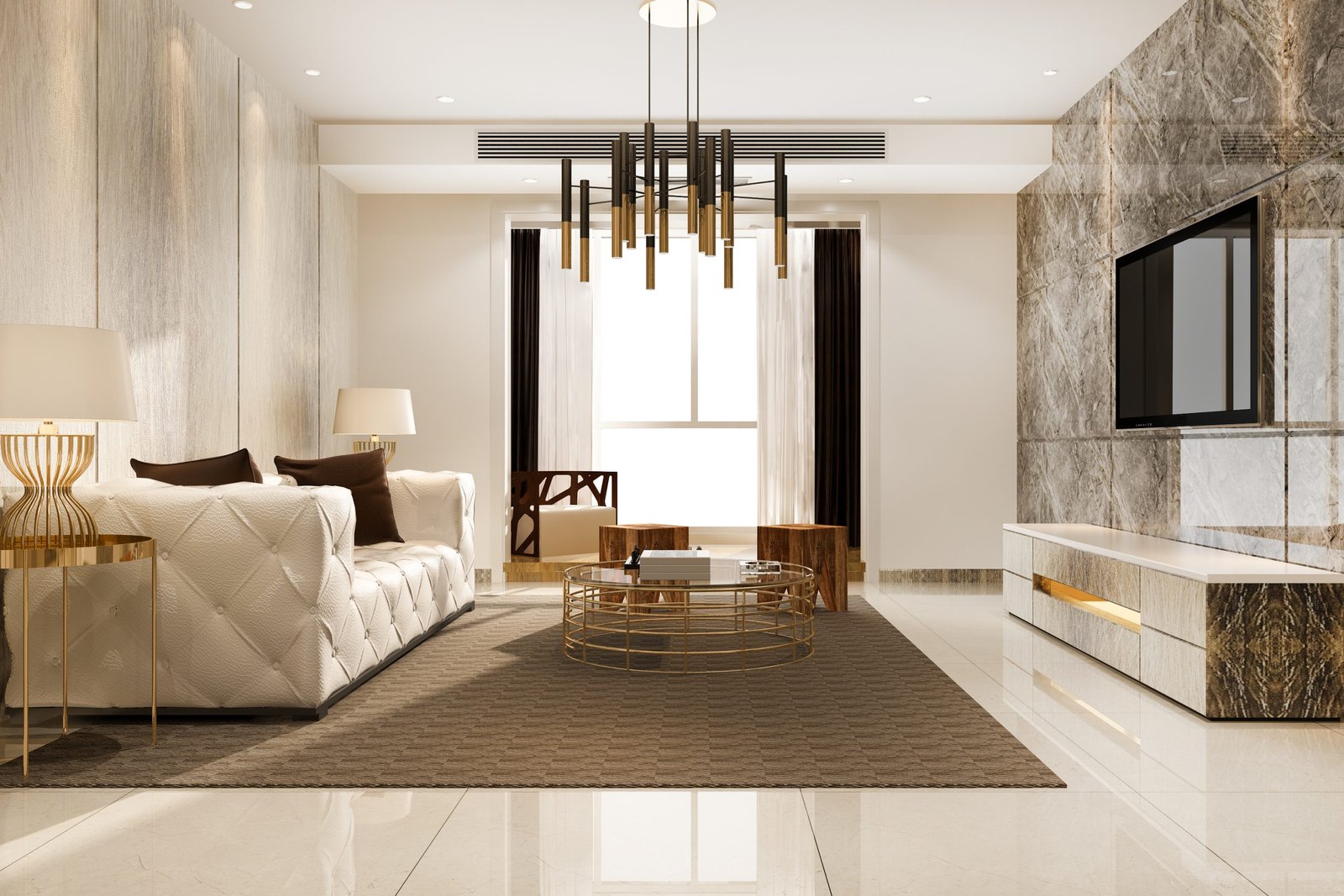
A home should embody who we really are and how we want to live. Being in Mississauga means balancing urban sophistication with livable and comfortable spaces. Fortunately, appropriate interior design tricks will allow you to turn a house into a home that actually supports an ideal lifestyle.
There is something very interesting about watching homes in this dynamic city. The most successful spaces are not always the most expensive, nor are they using only the latest furniture. In fact, they are spaces that feel carefully designed with integrity and that support or reflect the owner’s character.
This might even require professional interior design support from experts like Studio Kimi. So, here is our take on what kind of interior design supports an ideal lifestyle in Mississauga.
Key Takeaways For Your Mississauga Home
Creating an ideal lifestyle through interior design isn’t about following rigid rules. It’s about understanding principles that support both aesthetics and well-being:
- The 80/20 rule provides cohesion with personality by balancing dominant styles with accent pieces
- The 70/30 approach creates dynamic contrast while maintaining visual harmony
- Odd-numbered groupings naturally appeal to the eye and create movement in a space
- Functional layouts should prioritise how you actually live, not just how spaces look
- Mixing diverse elements adds depth when connected by common threads like colour or texture
- The seven design principles serve as a checklist for creating balanced, unified spaces
Why Interior Design Actually Matters for Your Lifestyle
Many people don’t realise that their living environment influences their mental health and daily productivity. The research published in the International Journal of Environmental Research and Public Health states that most people experience psychological responses to their indoor environment, which makes intentional interior design pivotal to overall well-being.
When you consider it, we all spend countless hours at home working, relaxing, entertaining, and recharging. When living spaces feel cluttered or disjointed, it ultimately impacts everything from adrenaline (the body’s fight-or-flight chemical response) to cognitive focus.
Experts cite the three most impactful interior design elements on mental health as colour selection, type of lighting, and spatial planning. If the correct choices are made based on personal preferences, the correct creations will foster environments in which humans can thrive.
The 80/20 Rule for Cohesive Interior Design in Mississauga
Let’s start with something simple yet transformative. The 80/20 rule is a secret weapon against spaces that feel either too boring or overwhelming. How does it work? You have to dedicate 80% of a room to a dominant style or colour palette, then reserve the remaining 20% for accent pieces. This creates visual interest without tipping into chaos.
For example, our interior design experts would suggest a Mississauga living room with soft, neutral tones covering 80% of the space, say, beige walls, cream sofas, and light hardwood floors. Then, introduce that bold 20% through jewel-toned throw pillows, statement artwork, or a vibrant area rug. Suddenly, the space has personality without feeling cluttered.
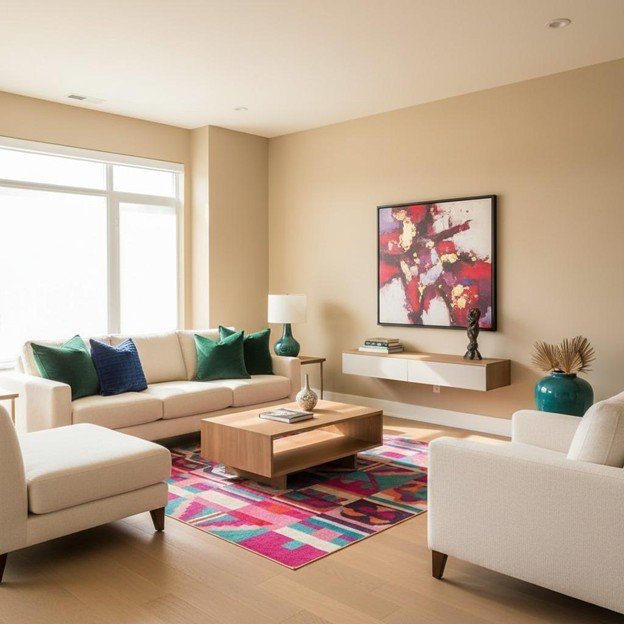
This principle works because human brains crave both harmony and stimulation. Too much of one colour or style makes a room feel flat. Too many competing elements create visual noise that’s mentally exhausting.
The 70/30 Rule To Balance Primary Style with Contrast
While similar to the 80/20 rule, the 70/30 approach focuses specifically on creating balance through contrast. Apply 70% of a primary colour scheme or design style, then use the remaining 30% to introduce contrasting textures, patterns, or complementary colours.
In practice, this might look like a predominantly modern minimalist bedroom (70%) with vintage brass lighting fixtures and a weathered wooden bench (30%). The contrast adds depth and character while maintaining the overall design vision.
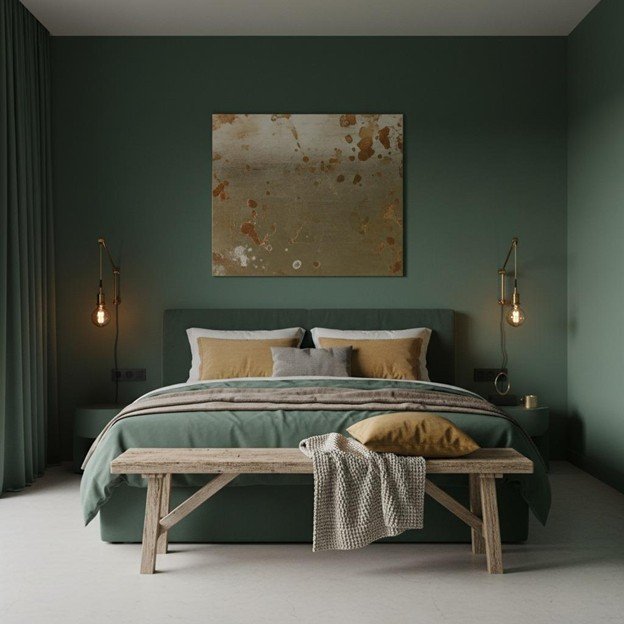
Bold, saturated colours are making a comeback in 2025, with colour-drenched rooms using a single hue in varying shades to create cohesive and impactful looks. This trend pairs perfectly with the 70/30 rule, where rich colour can be embraced while using that 30% for unexpected textural contrasts.
The 3-5-7 Rule To Make It Simpler
Arranging decor in odd-numbered groups creates more visually appealing compositions than even numbers. The 3-5-7 rule suggests grouping decorative items in sets of three, five, or seven.
Why? Human eyes naturally find odd-numbered arrangements more dynamic and interesting. Even numbers tend to feel static and predictable.
Try this in a Mississauga home where, instead of placing two identical lamps on either side of a console table, create a vignette with three varying-height candles, five framed photos arranged asymmetrically, or seven small plants clustered together.
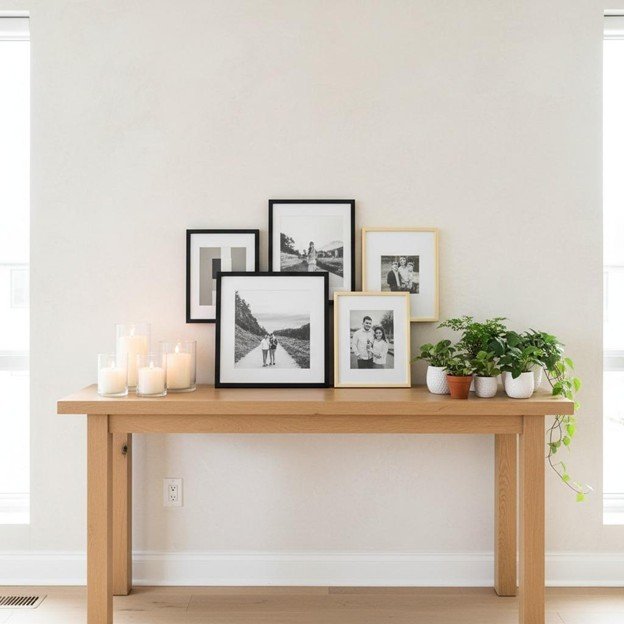
This principle extends beyond small accessories. When selecting artwork for a gallery wall or choosing throw pillows for a sofa, thinking in odd numbers will consistently produce more engaging results.
Creating Functional Flow Through Smart Layout
Canadian homes are increasingly incorporating large picture windows, sliding doors, and decks with flooring that mirrors interior spaces to create continuity between home and nature. This biophilic approach is functional; therefore, most design experts recommend it.
Furniture placement should support how people actually live. Start by identifying a room’s primary function. Is the living room mainly for family movie nights? Entertaining guests? Remote work sessions? The layout should reflect these priorities.
Dedicate the majority of floor space to primary activities, then carve out smaller zones for secondary functions like storage or display. This prevents spaces from feeling cramped while ensuring everything has its place.
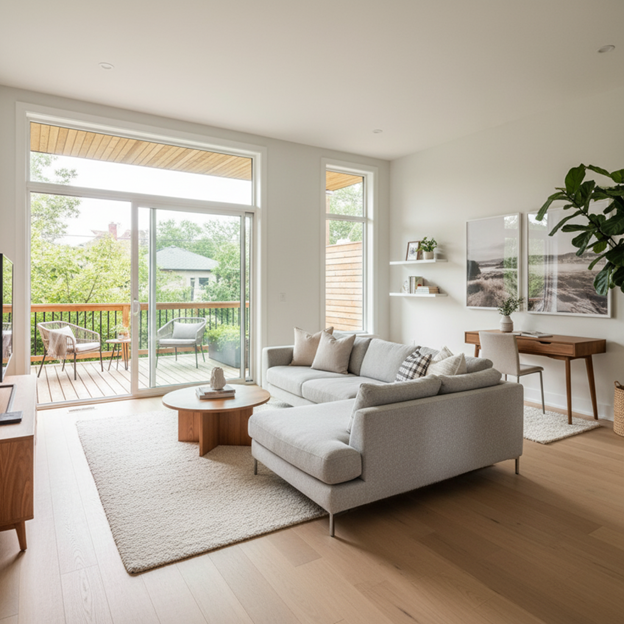
Many Mississauga residents struggle with multi-purpose rooms. The solution? Define clear zones through furniture arrangement, area rugs, or subtle lighting changes. The brain will register these spatial cues, making rooms feel more organised even when serving multiple functions.
Mixing Patterns, Periods, And Colours With Confidence
The fear of mixing different design elements keeps many people stuck in safe, predictable spaces. But creating a personalised home that reflects an ideal lifestyle requires a bit of courage.
Try this formula: combine three different patterns (like stripes, florals, and geometric prints), four period styles (perhaps mid-century modern, contemporary, vintage, and rustic), and five colours or textures. It sounds like chaos, but when executed thoughtfully, it creates remarkable depth and interest.
The key is maintaining connection points between these diverse elements. Maybe the patterns share a common colour, or various period pieces stick to similar wood tones. These subtle threads of consistency allow for bold combinations without visual discord.
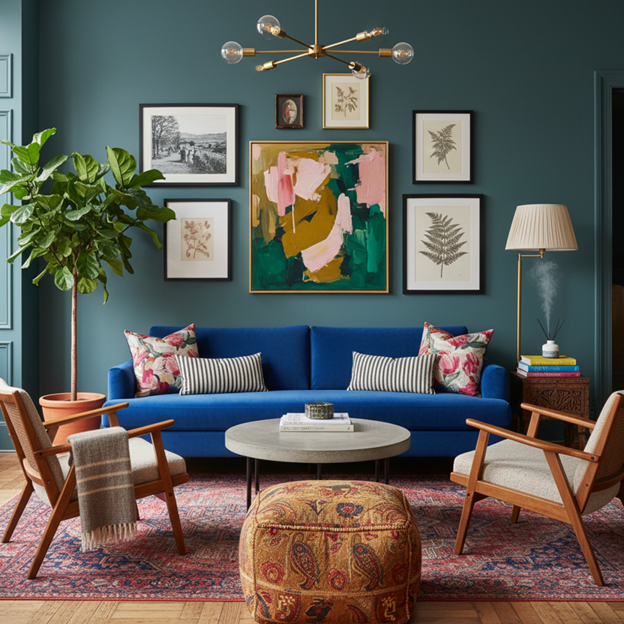
In 2025, interior design is seeing an upsurge in sensorial design that appeals to all senses, incorporating textures, scents, sounds, and lighting to create immersive spaces with psychological benefits. This multi-sensory approach naturally supports mixing diverse elements; homes become an experience rather than just a look.
Conclusion
Interior design extends beyond making lovely spaces; it affects the experience of daily life, affects the mood, and even supports the goals of a life. The interior design principles discussed are not particularly groundbreaking ideas; they are simply tools that are accessible to implement unique environments to promote an understanding of the experience of home.
Mississauga homes provide this incredible opportunity. The best parts of urban living, mixed with the residential conditions, are powerful. With these tried and true design ideas, spaces are not just being rearranged. The environment will support goals, reflect personality, and generally improve everyday life.
An effective life was not in a catalogue or cut out of a magazine, or stored in the cloud. An effective life is just created, one design idea at a time. Your home is patiently waiting to serve as the backdrop to your best life. Why not embellish it today?


