

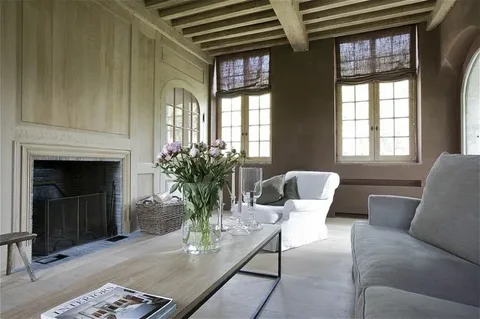
When you step into a heritage home in Eastern Ontario or wander through the cobblestone streets of Old Quebec, you’re witnessing more than just beautiful architecture. You’re experiencing the living legacy of classical interior design that shaped early Canada. It is a fascinating blend of European sophistication and Canadian practicality that tells the story of our nation’s formative years.
Classical interior design in early Canada wasn’t simply about copying European trends. It was about adaptation, survival, and creating something uniquely Canadian from borrowed traditions. Let’s go through the elegant halls and warm parlours of early Canadian homes, where every design choice told a story of cultural heritage, climate challenges, and emerging national identity.
Key Lessons from Classical Canadian Design
- Successful design adapts historical principles to local context (Canadian realities) rather than simply replicating foreign styles.
- Using mathematical relationships in design ensures spaces feel balanced and beautiful, regardless of the style.
- Embracing native resources like pine, maple, and local limestone builds authentic character and supports sustainable practices.
- Skilled handwork transforms simple materials into lasting, high-value details that endure through generations.
- Interiors should communicate cultural values, social identity, and personal aspirations, giving a space an authentic soul.
- Styles like Neoclassical show that restraint and clean lines create elegance; they also prove to be more.
What Made Classical Design “Classical” In Canada?

The term “classical” refers to design principles inspired by ancient Greek and Roman architecture and aesthetics. Think symmetry, proportion, and those elegant columns you see in old government buildings.
Classical design emphasised mathematical precision, using simple ratios to determine relationships between elements like window height and width or room dimensions. This wasn’t arbitrary, as these proportions created spaces that felt naturally balanced and pleasing to the eye.
If you like the style, you can consult with a home renovation and extension expert in Canada to help you achieve this look with a modern touch.
The core elements of classical interior design included:
- Symmetrical layouts where one side mirrors the other
- Classical architectural orders, including Doric, Ionic, and Corinthian columns
- Proportional harmony based on mathematical relationships
- Restrained ornamentation focusing on quality over quantity
- Classical motifs like laurel wreaths, urns, and acanthus leaves
- Natural materials such as marble, hardwoods, and stone
In early Canada, these principles would be tested against harsh winters, limited resources, and the practical needs of frontier life.
The Georgian Era Where British Elegance Meets Canadian Pragmatism (c. 1780-1830)

The Georgian style arrived in Canada through two main channels: British settlers and United Empire Loyalists fleeing the American Revolution. The Loyalists particularly embraced Georgian design as a symbol of their loyalty to the Crown, even as the style was falling out of fashion in Britain itself.
Why Georgian Design Dominated Early Canada
Georgian architecture and interiors were perfectly suited to the Canadian context for several reasons. The style’s emphasis on simplicity and mathematical precision meant it could be executed by skilled craftsmen without requiring elaborate imported materials. The symmetrical, rectangular floor plans were efficient to heat – a crucial consideration in Canadian winters.
Georgian homes built by prosperous Loyalists featured harmonious proportions, symmetrical composition, and interior detailing that showed the influence of classical traditions brought from New England. These homes became status symbols in early settlements across Ontario, the Niagara Region, and the Maritimes.
Key Features of Canadian Georgian Interiors
- Central entrance hall with symmetrical staircase featuring turned balusters
- Symmetrical room layout, like a drawing room on one side, dining room mirroring the other
- Raised panel wainscoting crafted from local eastern white pine, maple, or oak
- Crown moulding with dentil work and egg-and-dart patterns (simplified from British versions)
- Classical fireplace mantels with pilasters and pediments as focal points
- Climate adaptations like smaller windows and thicker walls for insulation
- Subdued colour palette, like creams, soft greens, muted blues, and warm greys
- Simple wall treatments like muted earth tone paint or modest wallpapers above wainscoting
Regional Georgian Variations
Not all Georgian homes looked identical. In the Maritimes, where shipbuilding thrived, you’d find maritime influences in the woodwork and built-in cabinetry. Ontario and Quebec homes in prosperous areas rivalled American examples in sophistication, while rural Georgian homes maintained simpler, more vernacular interpretations of the style.
The Neoclassical Refinement (c. 1810-1830)

As Canada matured, so did its design sensibilities. The Neoclassical period represented a softening of Georgian austerity, introducing more delicate curves and refined details while maintaining classical proportions.
The Evolution Toward Elegance
| Feature | Neoclassical (c. 1820 Canadian Example) | Georgian Predecessor |
| Proportions | More graceful | Less graceful (implied) |
| Ornamentation | Lighter and more delicate | Heavier (implied) |
| Plasterwork | Delicate with detailing from Greek classicism (e.g., acanthus leaf medallions) | Less delicate; different detailing |
| Symmetry | Key principle | Key principle (same) |
| Mouldings (Doors/Windows) | Refined with subtle curves | Strictly rectangular profiles |
| Furniture | More refined (e.g., klismos chair with curved backs and sabre legs) | Less refined (implied) |
| Overall Aesthetic | Elegance and sophistication | Less elegant (implied) |
Materials and Craftsmanship
The Neoclassical period saw increased use of decorative elements that evoked ancient Greece and Rome. Plaster ceiling medallions, decorative friezes, and carefully crafted cornices became more common in prosperous homes. Local limestone found new applications in fireplace surrounds, sometimes carved with classical motifs.
Canadian craftsmen, many of them skilled European immigrants, adapted Old World techniques to New World materials. German cabinetmakers brought their precision joinery, British stonemasons their knowledge of classical proportions, and French Canadian artisans their wood-carving expertise.
The Classic Revival For A New Nation (Early 1830s Onward)

The Classic Revival movement marked another shift in Canadian interior design, drawing more directly from the arts of ancient Greece and Rome. This style emphasised clean, straight lines and formal classical elements, moving away from the curves of Neoclassicism.
Architectural Drama in Canadian Homes
Classic Revival interiors featured bold architectural statements. Roman-inspired arched doorways and hallways created visual drama while maintaining classical proportions. Columns, whether full, engaged, or represented as pilasters, became more prominent interior features.
The colour palette often became bolder, with deeper tones appearing alongside traditional neutrals. Pompeii red, deep blues, and rich greens might accent walls, while architectural elements remained in classic white or cream.
Decorative motifs drew directly from antiquity; for example, lionheads, eagle symbols, pineapples (representing hospitality), and acanthus leaves appeared in plasterwork, furniture carving, and metalwork. These were cultural statements connecting the young nation to ancient civilisations that had valued democracy and civic virtue.
The French Colonial Legacy Became Quebec’s Distinctive Character

While British styles dominated much of Canada, Quebec developed its own distinctive approach to classical design, blending French colonial traditions with classical elements.
New France’s Practical Elegance
French colonial homes in Quebec featured distinctive steep roofs, sometimes almost twice as tall as the house below, perhaps to prevent snow accumulation. These structures showcased a different interpretation of classical proportions, one adapted to both French architectural traditions and the Canadian climate.
Inside these homes, you’d find spaces designed for both functionality and subtle elegance. Interiors typically contained one or two rooms, with hearths and chimneys initially made of clay, later replaced by brick. The simplicity wasn’t poverty, but it was intentional design suited to frontier life.
As Quebec society became more prosperous, classical elements appeared in urban homes. French interpretations of classical design often featured more ornate details than British styles, with carved woodwork showcasing floral and nature motifs alongside classical elements.
The Quebec Difference
Quebec’s classical interiors maintained distinct characteristics even as they adopted classical principles. The influence of French Rococo design occasionally appeared in more elaborate homes, with curved lines and delicate ornamentation contrasting with British geometric precision.
Stone construction, more common in Quebec than in other Canadian regions, created different interior atmospheres. Thick stone walls, practical for temperature regulation, provided surfaces for whitewashing that reflected light in the often-dark interiors.
Materials To Build Classical Beauty from Canadian Resources
One of the most fascinating aspects of classical interior design in early Canada was how designers worked with available materials to achieve classical effects.
Eastern White Pine:
- The “workhorse” material is due to its fine grain and workability.
- Ideal for painted trim, mouldings, and panelling.
- Used to mimic more expensive woods or create the clean white architectural details essential to classical design.
Quartersawn Oak:
- Prized for its straight grain and ray fleck pattern.
- Used for built-in cabinetry and wainscoting in prestigious areas.
- Conveyed a sense of quality and permanence.
Canadian Maple:
- Harder than oak with beautiful grain patterns.
- Preferred for flooring and furniture construction.
- Its honey tones warmed the interiors and were durable for daily use.
Birch
- Abundant and affordable, serving as a less expensive alternative to maple.
- Used for furniture and interior millwork.
- Fine-grain accepts stains well, aiding in creating unified colour schemes.
- Stone and Mineral Resources
Canadian Limestone (Ontario and Quebec):
- A signature local material for classical design.
- Used for fireplace surrounds, hearths, and decorative architectural elements.
- Its creamy colour and workability made it an excellent alternative to imported marble.
Granite
- Appeared in foundations and occasionally as decorative elements in elaborate homes.
- Its hardness made it more difficult to work, but its permanence symbolised stability and prosperity.
What Designers Say
Contemporary designers and historians offer valuable perspectives on classical interior design’s enduring relevance. Design experts at Studio Kimi note that classical design in early Canada represented,
“More than aesthetic choice and it was cultural expression, practical adaptation, and social aspiration rolled into one.”
This multi-layered significance helps explain classical design’s lasting influence. It was all about understanding that classical proportions remain fundamental to good design, even in contemporary contexts. The mathematics underlying Georgian symmetry creates spaces that feel inherently right to human perception.
Conclusion
Classical interior design in early Canada tells a story of cultural transmission, practical adaptation, and creative evolution. Today, as we face our own design challenges, i.e, sustainability, cultural identity, and technological integration, we can draw inspiration from early Canadian classical design. Its emphasis on proportion and harmony, use of local materials, adaptation to climate, and commitment to quality craftsmanship offer timeless lessons.


