
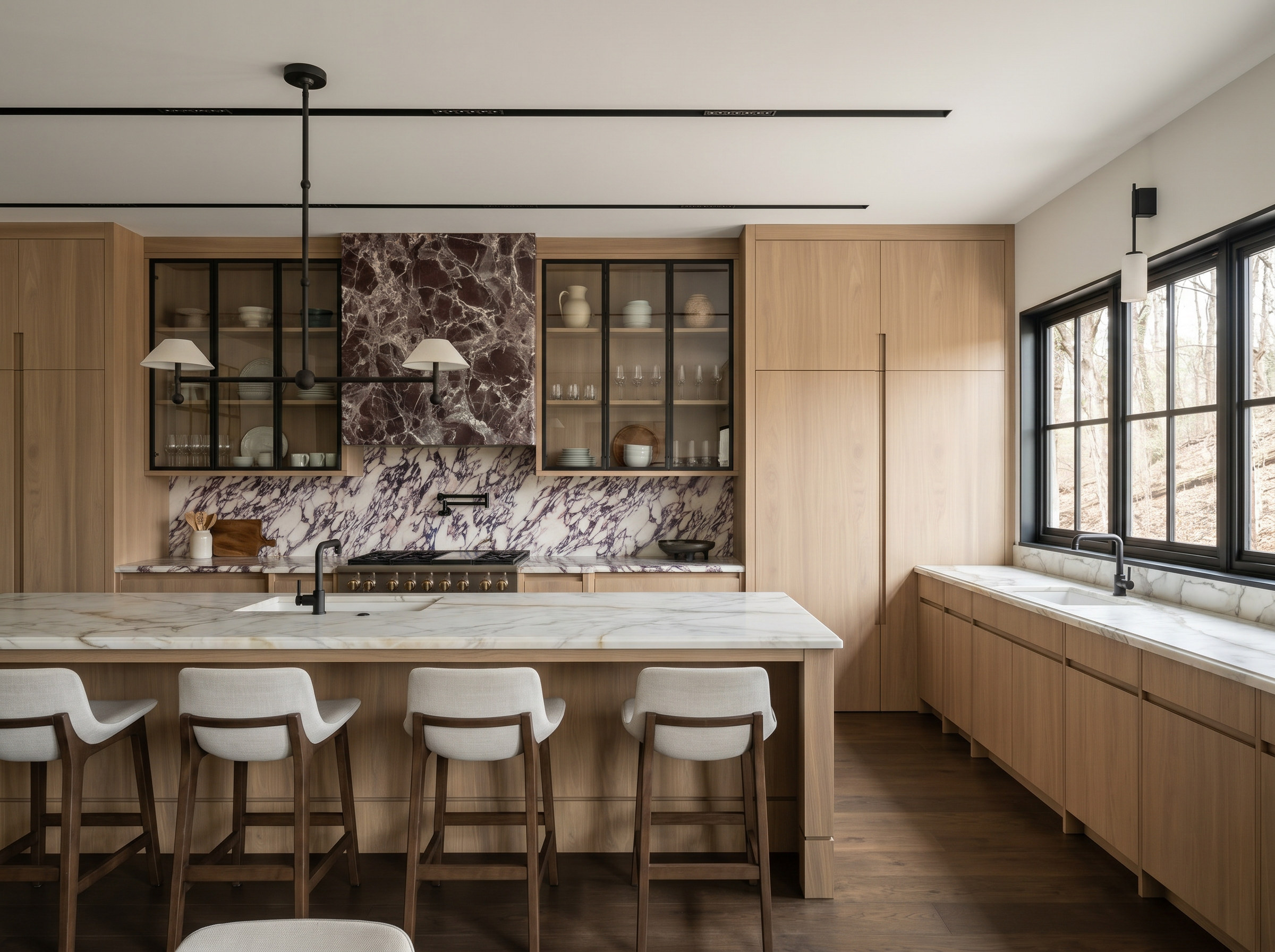
If you have started looking into a renovation, you have probably run into the term “design-build” and wondered what it actually means — and whether it matters for your project. In plain terms, design-build means one team handles both the design and the construction of your renovation, from the first sketch to the finished room. There is no hand-off between a designer and a separate contractor; the same people who draw the plan are the ones who build it.
It sounds simple, but it changes the experience of renovating quite a bit. Here is what design-build is, how it differs from the usual way, and when it is the right fit.
The usual way vs. design-build
The traditional path splits a renovation into two separate relationships. First you hire a designer to plan the space and produce drawings. Then you take those drawings and hire a contractor to build them, and you manage the relationship between the two as the work proceeds. You are the link between two businesses that may have never worked together.
Design-build folds those two roles into one. The drawings, the trades, the schedule, and the budget all run through a single point of contact. You still approve every decision — you are simply not the one translating a drawing into a built wall or chasing a trade that did not show. You can see how we structure that on our services page.
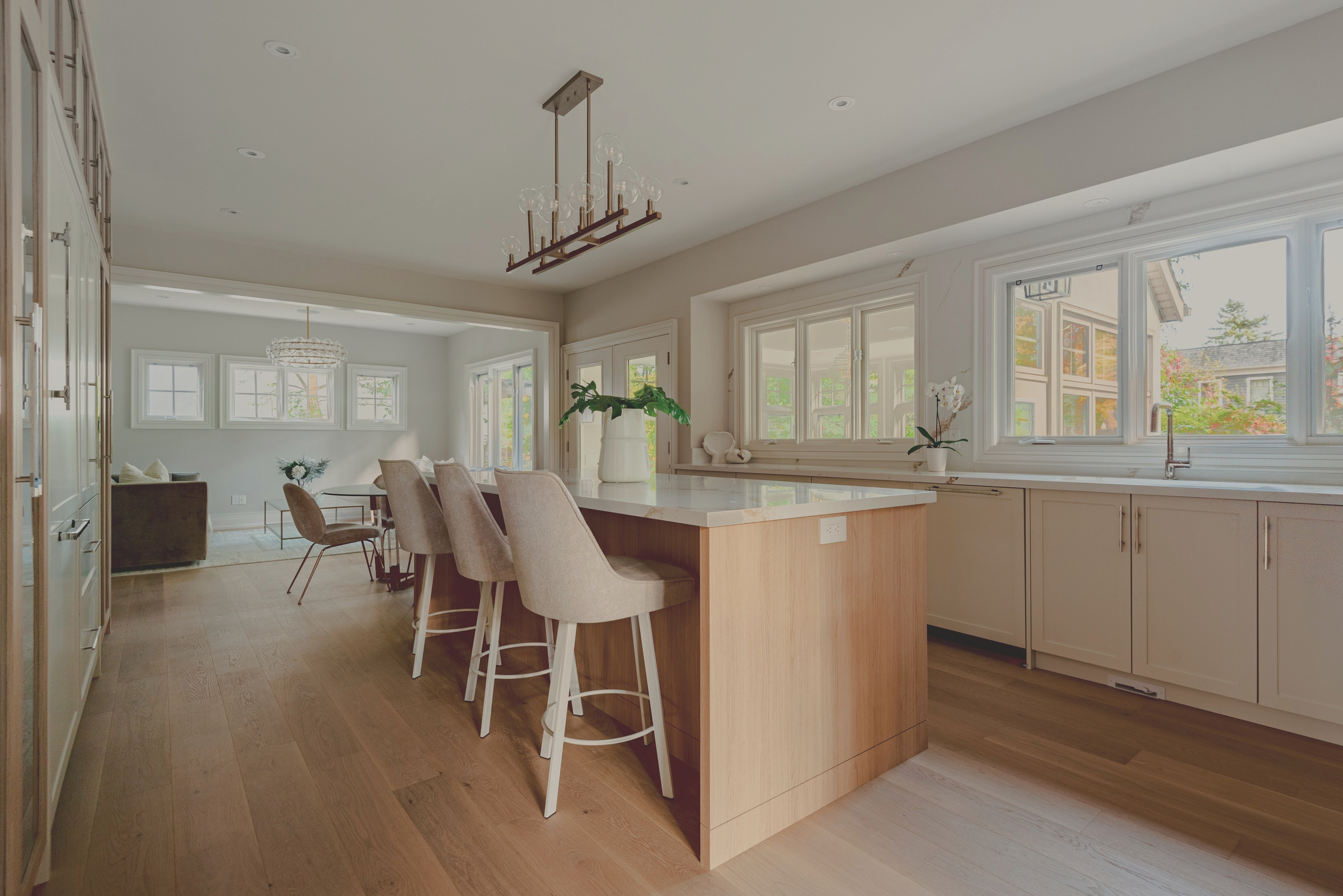
What one team actually changes
Accountability
One party owns both the plan and the build, so there is no gap to fall into.
Budget, tested early
Cost is checked as decisions are made, not after the quotes come back.
Less on your plate
The team sequences trades and chases deliveries, not you.
Accountability
This is the clearest difference. When design and construction are split, responsibility is split too: if the site does not match the drawing, the designer and the contractor can each point at the other, and you are in the middle deciding who is right. With one team, the same party owns both the intent and the execution, so there is no gap to fall into.
Budget tested early
A design produced without a builder in the room can drift from what is buildable on your budget, and the gap often shows up only when construction quotes come back higher than expected. When the people who price and build the work also help shape the design, cost gets tested as decisions are made rather than at the end. Neither approach removes the need for honest numbers — renovation costs in the GTA are real either way, which we cover in our guide to renovation costs.
Less on your plate
With a split team, the day-to-day coordination — sequencing trades, reconciling the drawings against the build, sorting out the late tile delivery — lands on you. Design-build moves that operational load to the team running the project. You stay in control of the decisions; you just stop being the project manager.
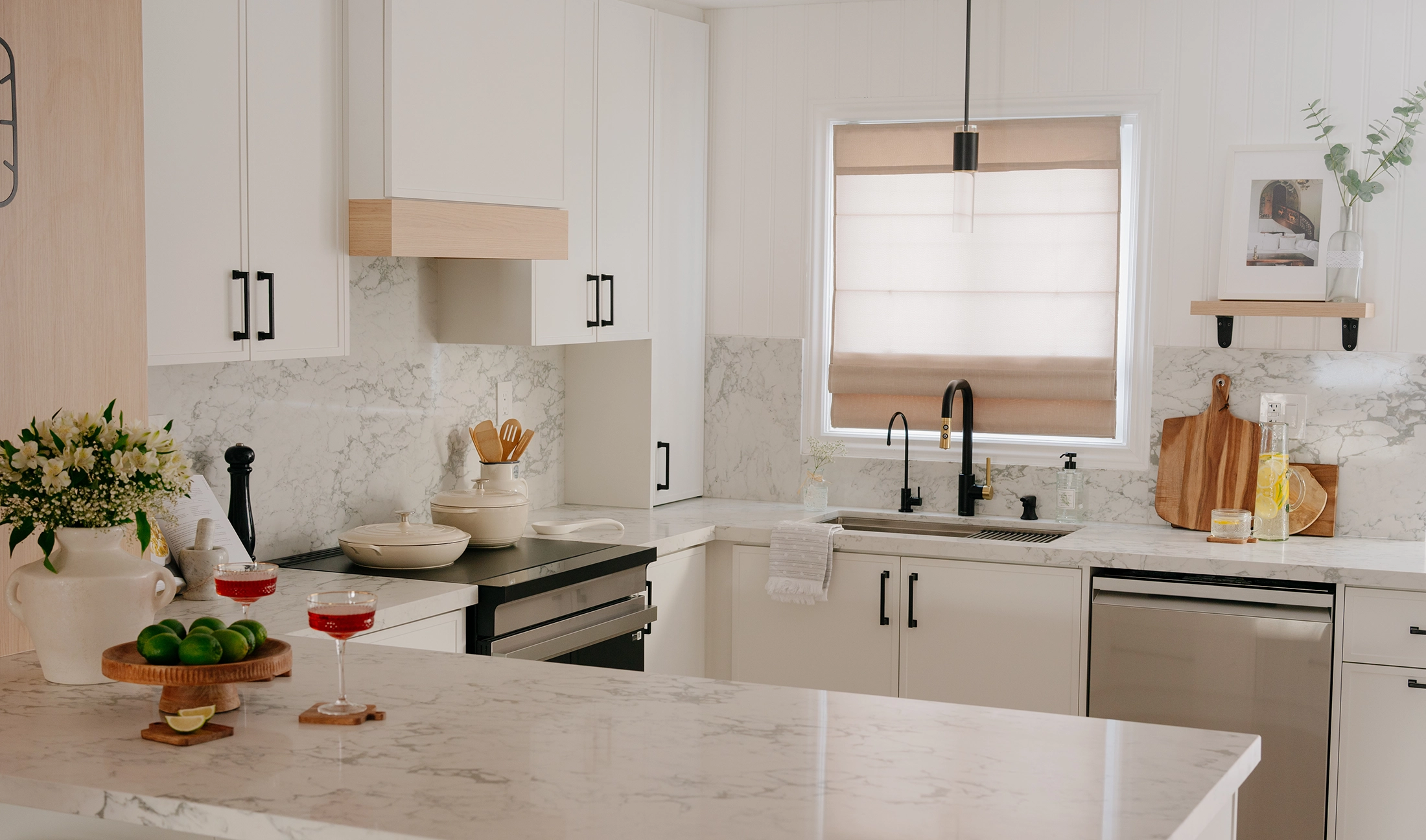
When design-build is the right fit
The integrated model tends to earn its keep when:
- The renovation is larger or structural, with more trades to sequence.
- You want a single point of contact rather than two contracts to hold together.
- The design is still taking shape and you want it tested against the budget as you go.
- Your time is limited and you would rather approve coordinated decisions than chase them.
It is less essential when you already have a builder you trust and complete drawings in hand, or when the scope is a small, contained refresh. We look at that trade-off in detail in design-build vs. design-only and design-build vs. hiring a general contractor.
How the process runs
Because one team carries the project the whole way, the work moves along a single continuous path instead of restarting at a hand-off:
How Studio Kimi works
Studio Kimi is a design-build studio based in Oakville, working across Mississauga, Burlington, and the wider GTA. We hold BCIN and NCIDQ credentials and handle the design, the drawings, and the construction as one process, so every room belongs to the same plan. If you would like to talk through whether design-build fits your project, get in touch — there is no pressure, just a straight conversation about scope and budget.
Common questions
Is design-build more expensive?
Not inherently. You are paying for coordination that you would otherwise do yourself, and that has a value and a price — but it also reduces the costly miscommunication that comes from managing two separate parties. Once you account for your time and the risk, neither model is automatically cheaper.
Do I still get to choose the finishes?
Yes. Design-build changes who coordinates the work, not who decides. You approve the layout, the materials, and the finishes; the team brings you options that are already checked against the budget and the build.
Is it the same as a general contractor?
No. A general contractor builds from drawings someone else produced; a design-build team produces the design and builds it. That is why the design intent and the construction stay accountable to the same people.
Is design-build worth it for a smaller renovation?
Often not on its own. A single-room refresh with a clear scope and a builder you already trust may not need the integrated model. Design-build earns its keep as the work gets larger, more structural, or involves more trades to sequence — where the coordination it removes is worth the most. For a contained project, the honest answer is that a simpler arrangement can be enough.