
Renovation Costs · Studio Kimi Journal
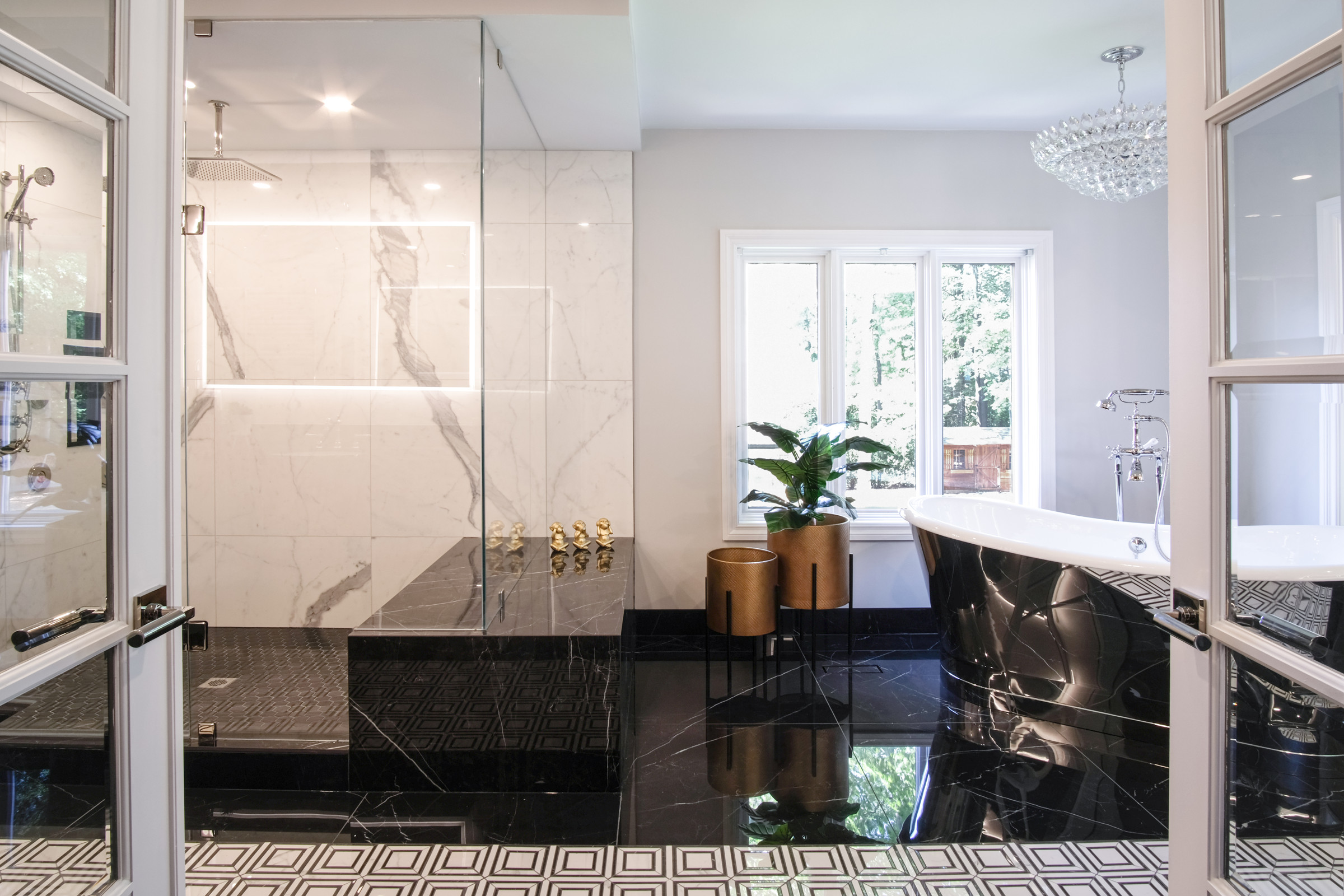
An ensuite is the smallest full renovation most homeowners will ever take on, and the one they underestimate most. It is a room you use twice a day, usually the size of a parking space, and it carries plumbing, waterproofing, ventilation, electrical and tile all inside a footprint where nothing can be hidden. That combination is why the number surprises people.
Here is what the work actually costs in the Greater Toronto Area right now, where the money goes, and the honest answer on whether you get it back when you sell.
The realistic range
Most ensuite renovations in Ontario land between $15,000 and $40,000. That is a wide band, and the spread is not really about taste. It is about how much of the room you move.
Toward the lower end you are keeping the layout: the toilet, sink and shower stay where they are, and you are replacing surfaces, fixtures, vanity and lighting. Toward the upper end you are changing the plan — moving the shower to the other wall, taking out a corner tub, opening into a closet, or reworking the ventilation. The finishes people worry about first are rarely what separates a $20,000 ensuite from a $38,000 one.
What actually drives the cost
Moving plumbing
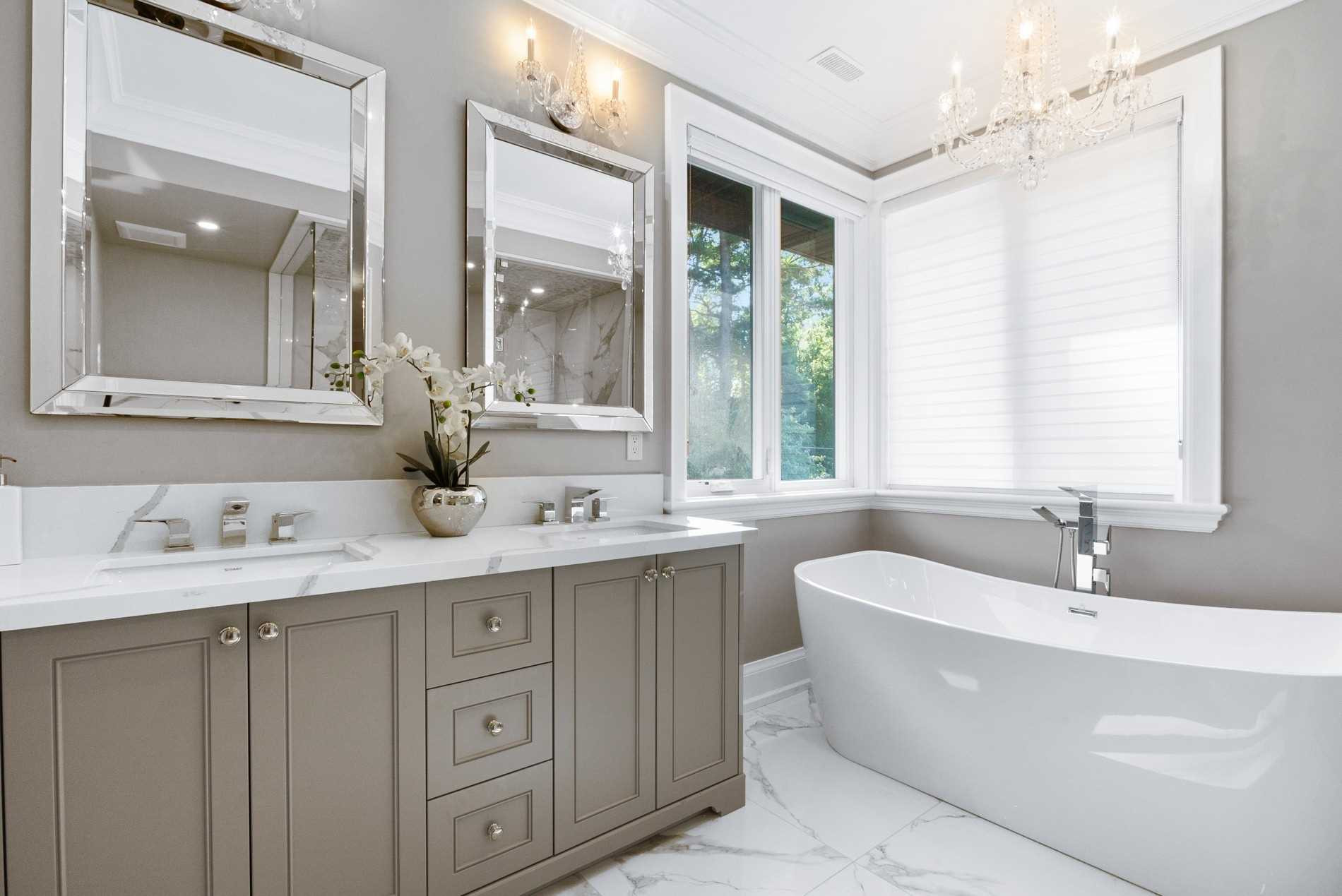
This is the single biggest cost driver, and it is worth understanding before you fall in love with a layout. Relocating a drain means opening the floor, and in most GTA homes that means working around joists that were never placed with your new shower in mind. Supply lines are comparatively easy; drains are not. A layout that keeps the drains and moves only the fixtures can save several thousand dollars without looking like a compromise.
Waterproofing and substrate
Invisible, non-negotiable, and the thing that decides whether the room is still sound in fifteen years. A properly built shower is a system — sloped substrate, membrane, sealed corners and penetrations, then tile. It is not an upgrade line you trade away for a nicer faucet.
Tile choice and tile labour
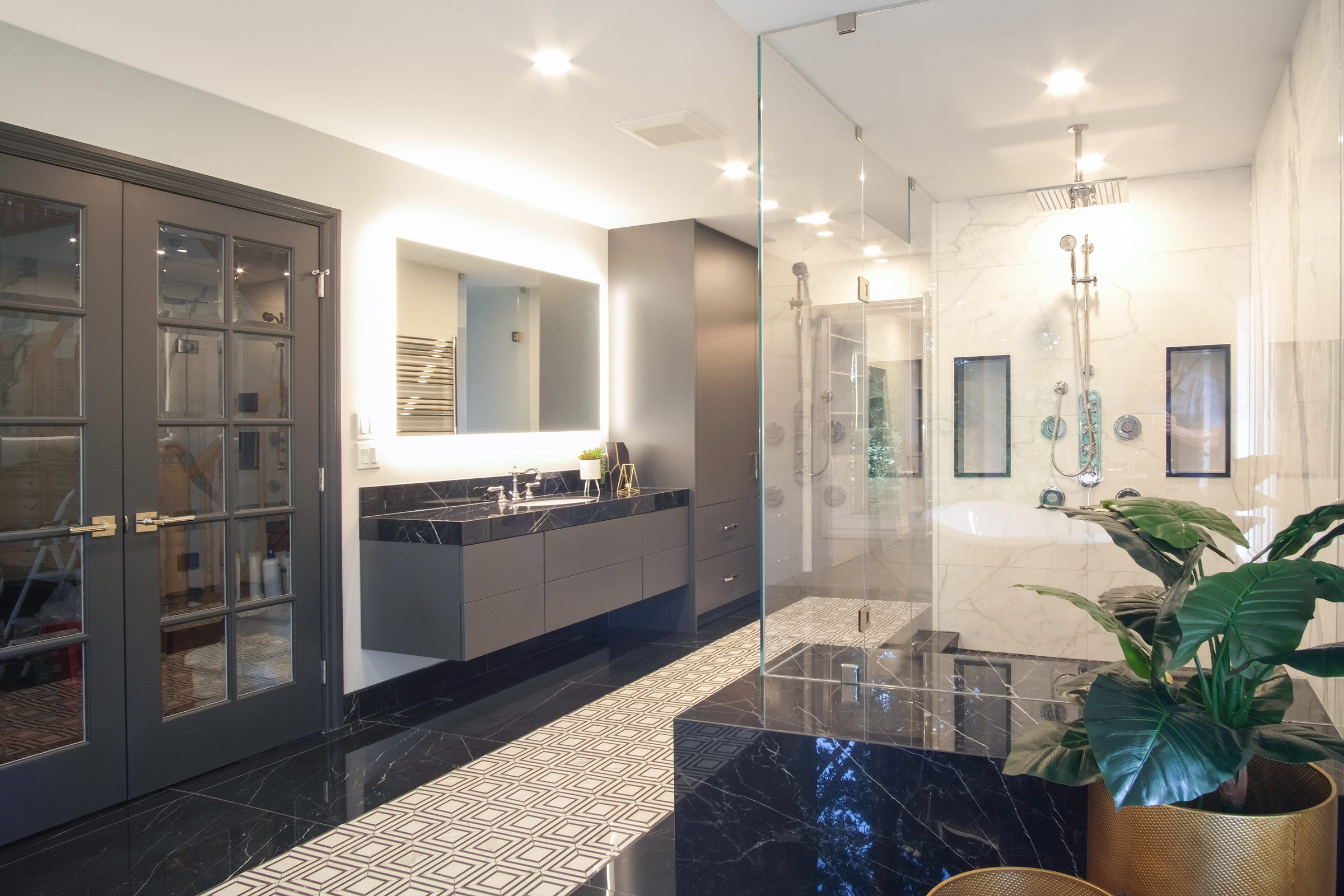
Large-format porcelain, small mosaic, and natural stone all cost different amounts to buy and very different amounts to install. A large slab-look porcelain panel reduces grout lines and looks calm, but it needs a flatter substrate and more hands to set. Mosaic is cheap by the sheet and slow by the hour. Ask what the tile costs to install, not just to buy.
Ventilation and electrical
An ensuite that fogs and stays damp will fail cosmetically long before it fails structurally. Correct fan sizing, ducting to the exterior rather than into a soffit, and lighting that works both for getting ready and for winding down are small line items with a large effect on how the room feels day to day.
The condition you start from
Older homes hide things. Once the tile is off you may find failed waterproofing, a rotted subfloor, aluminum wiring, or a vent that was never connected to anything. A sensible contingency for an ensuite is real, not defensive.
Does it pay you back?
Partly, and honestly — not dollar for dollar.
Bathrooms are consistently among the better-returning renovations, typically recovering somewhere in the range of 50 to 80 percent of their cost at resale. In mid-market Ontario neighbourhoods a well-executed primary ensuite tends to support a premium in the fifteen to thirty thousand dollar range, which is why the low end of the renovation range often makes better financial sense than the high end if selling is the goal.
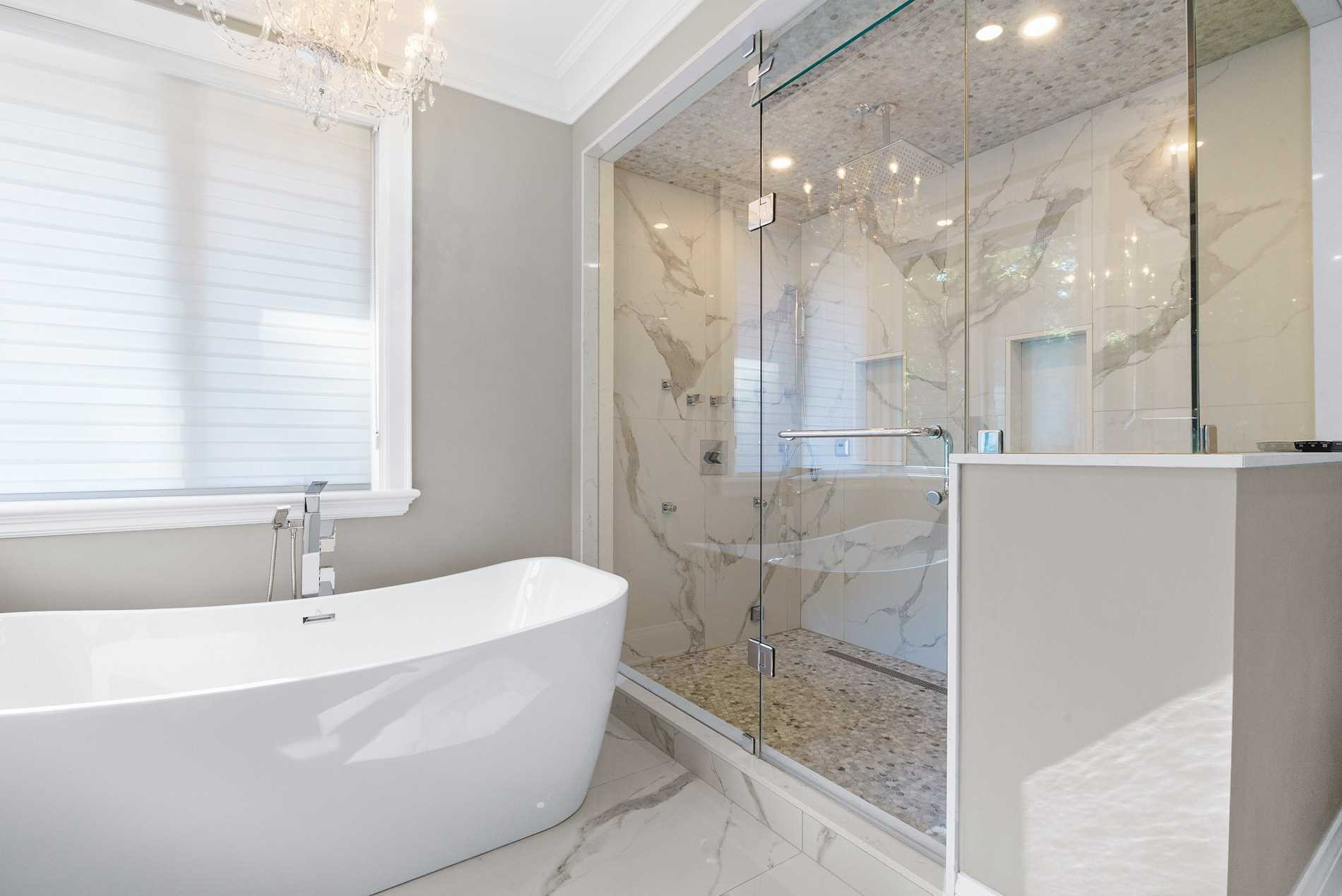
But the return figure is the wrong lens for most people. Nobody renovates their ensuite as an investment vehicle. The realistic framing is this: if you are staying, you are buying five or ten or twenty years of a room that works, and recovering a good share of the cost whenever you eventually leave. If you are selling next spring, the case is narrower — a dated but clean bathroom rarely kills a sale, while a half-finished one does.
The place a renovation genuinely loses money is over-building for the street. An ensuite finished well beyond what the rest of the house supports does not find a buyer willing to pay for it. Which renovation choices actually hold their value is worth reading alongside this if resale is part of your thinking.
How long you lose the room for
Plan on three to five weeks for a straightforward ensuite, longer if the layout changes or if a custom vanity or stone top is involved. Much of that is not workdays — it is waiting. Waterproofing cures, tile sets, grout cures, stone is templated after the cabinetry is in and then fabricated. Those gaps are why a bathroom that only needs “a couple of weeks of work” still takes a month. Our note on how long renovations actually take covers the same pattern at whole-house scale.
If it is your only full bathroom, sort that out before demolition day rather than during it.
Where the money is well spent
If the budget is finite — and it always is — the order we would defend is: waterproofing and ventilation first, then the layout, then the tile, then the fixtures. That is close to the reverse of the order most people shop in. Fixtures are the easiest thing to change later and the most tempting thing to overspend on now.
The second thing worth protecting is storage. Ensuites fail in use more often through lack of somewhere to put things than through any material choice. A vanity planned around what actually lives in the room beats a prettier one that does not.
Deciding whether to start
Three questions settle most of it. Does the layout work, or are you fighting the room every morning? Is anything actually failing behind the surfaces? And how long are you staying? A room that functions and is merely dated is a different project — and a much cheaper one — than a room with a shower that has been leaking quietly into the floor.
If you are weighing it up, it is worth having the layout and the budget tested against each other before anything is ordered. That is what our process is built to do, and it is also why we work design-build — the person drawing the room and the person pricing it are not sending each other surprises.
Tell us what you are thinking about and we will give you a straight read on what it takes.
Frequently asked questions
How much does an ensuite renovation cost in the GTA?
Most ensuite renovations in Ontario fall between $15,000 and $40,000. Keeping the existing plumbing layout puts you toward the lower end; moving drains, reworking the ventilation or changing the footprint moves you toward the upper end.
Does an ensuite renovation add value to your home?
Usually yes, but not dollar for dollar. Bathroom renovations typically recover about 50 to 80 percent of their cost at resale, and in mid-market Ontario neighbourhoods a well-executed primary ensuite tends to support a premium of roughly $15,000 to $30,000. Over-building beyond what the street supports is where the return disappears.
What makes an ensuite renovation expensive?
Relocating plumbing drains is the biggest single driver, because it means opening the floor and working around existing joists. After that: the waterproofing system, the tile format and its installation labour, ventilation and electrical work, and whatever the demolition uncovers in an older home.
How long does an ensuite renovation take?
Three to five weeks for a straightforward renovation, and longer if the layout changes or custom millwork and stone are involved. A large share of that time is curing and fabrication lead time rather than trades on site.
Should I renovate my ensuite before selling?
If the room is dated but sound and clean, usually not — you are unlikely to recover a full renovation on a short timeline. If something is actively failing, or the room reads as unfinished, fixing it is worth doing. A partly-renovated bathroom costs more at the negotiating table than a dated one.