
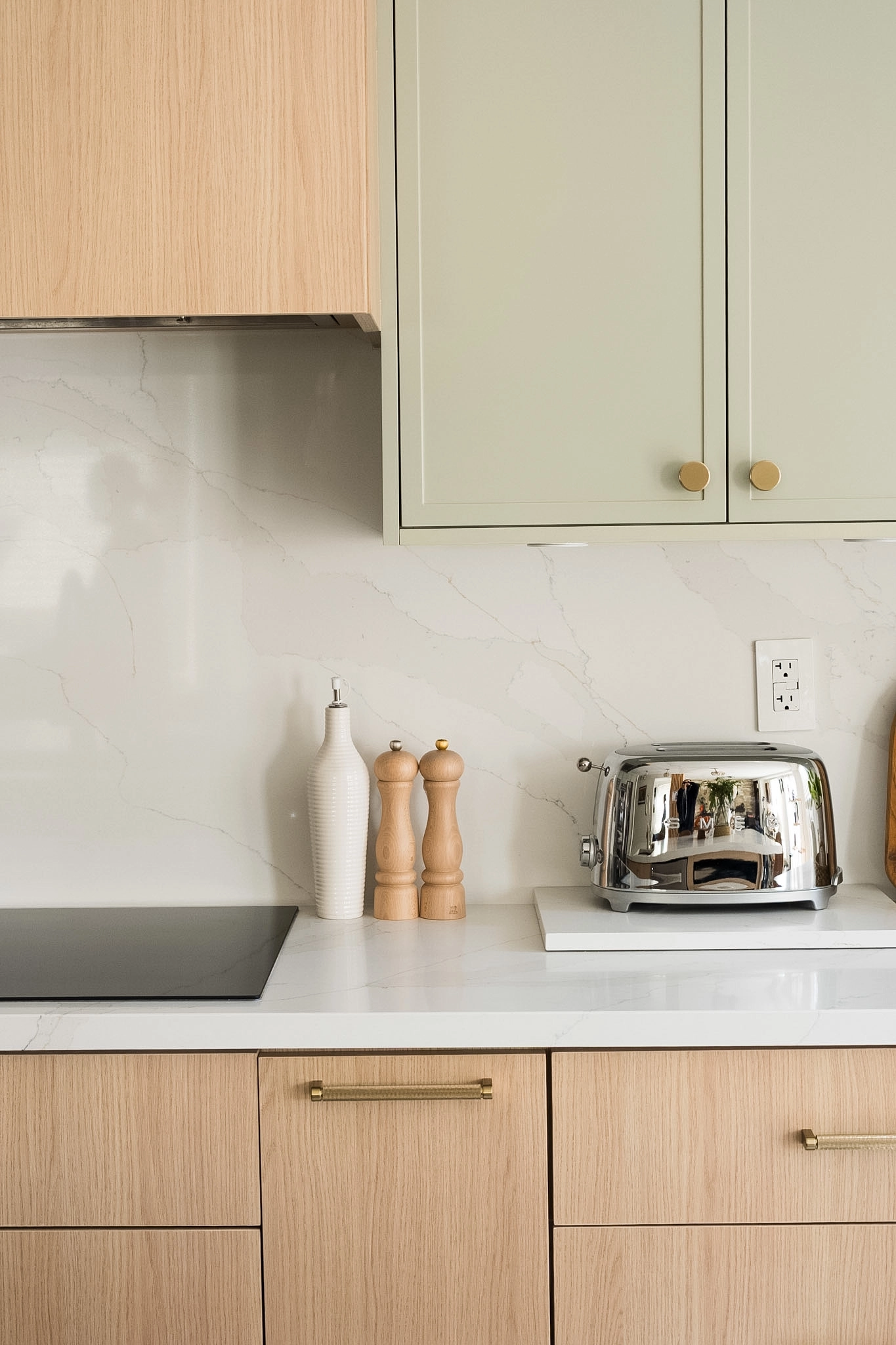
We get some version of this question on almost every consultation: “will this add value, or am I just doing it because I want it?” Both reasons are valid — but if resale is part of your thinking, some renovation choices hold up far better than others once your home goes back on the GTA market.
This isn’t a return-on-investment calculator. Renovation costs and resale premiums shift too much by street, by season and by what else is on the market to responsibly quote a number for your specific home — if you want a sense of realistic budgets first, our kitchen and bathroom cost guides are a better starting point than a resale multiplier. What we can tell you, from working across Oakville, Mississauga and Burlington, is which decisions tend to age well and which ones tend to work against you.
Kitchens and primary bathrooms still carry the most weight
This isn’t new information, but it’s still true: a dated kitchen or a tired primary bathroom is one of the fastest ways to make an otherwise well-kept GTA home feel older than it is. Buyers walk in and mentally price a renovation the moment they see laminate counters or a fibreglass tub surround from the 1990s. A well-executed kitchen or bath doesn’t just look better in photos — it removes the biggest objection a buyer has to making an offer.
The word “well-executed” matters more than “expensive.” A mid-range renovation with good layout, quality cabinetry and finishes that suit the house tends to outperform a high-end renovation that only suits the owner’s personal taste.
If a primary ensuite is the bathroom in question, our ensuite renovation cost guide for the GTA breaks down what drives the number and what you tend to get back.
Timeless finishes outlast trend-driven ones
The renovations that hold value best are usually the ones that don’t scream a specific year. Natural materials — wood, stone, quality tile in classic proportions — read as “well cared for” a decade later. Heavy trend pieces (a very specific accent wall colour, an ultra-particular tile pattern, a finish that was everywhere for exactly one design cycle) tend to date a room the fastest, even when they were done beautifully.
This is why we push clients toward a strong, quiet material palette for the bones of a renovation — cabinetry, flooring, counters — and save the more expressive choices for things that are cheap and easy to change later: paint, hardware, light fixtures, decor.
Functional layouts beat square footage
An open, awkward-flowing 2,400 sq ft home can feel smaller and less valuable than a well-laid-out 2,000 sq ft one. GTA buyers touring resale homes are sensitive to things like a kitchen that doesn’t face the family living space, a primary suite with no real closet, or a main floor that forces you to walk through one room to get to another. Fixing flow — even without adding square footage — is one of the more overlooked ways a renovation adds real, felt value.
Over-personalizing a space works against you
The renovations that add the least resale value are usually the ones designed around one person’s very specific life: a home theatre that eats a bedroom, a single-purpose hobby room with no other use, a primary bath stripped down to one giant walk-in shower with no tub in a family-home market. These choices might be exactly right for how you live today, but they narrow your buyer pool later. If a room can only be read one way, it’s worth asking whether a more flexible version does 90% of what you want while keeping the space usable for the next owner too.
Permits and proper process protect the value you’re adding
An addition, a structural change, or an electrical/plumbing upgrade done without the right permits doesn’t just create risk during a sale — in our experience it’s one of the more common ways a renovation’s value gets discounted or disclosed as a problem during a real estate transaction. Working with a designer or design-build team who handles permitting properly is part of what protects the value of the work, not a separate box to check — see our design process for how that fits into a project from the start.
Curb appeal and the first ninety seconds
Interior renovations get most of the attention, but the exterior sets the price expectation before a buyer ever opens the front door. A tired front entry, dated exterior lighting or an overgrown, unplanned front garden can undercut an excellent interior renovation simply by lowering what a buyer expects to find inside. It’s a smaller spend than most interior work and it’s often the most underrated line item on a resale-focused project list.
Our take
If resale is genuinely part of the plan, the renovation that tends to perform best is the one built around good bones, a flexible layout and quality, timeless finishes — not the trendiest version of the moment, and not one built entirely around a single, very specific use. If you’re planning a renovation in Oakville, Mississauga or Burlington and want to think through which choices make sense for your home and your goals — or want to see how it looks in practice on a recent project like Erin Mills — contact us and we’ll talk it through with you.
Frequently asked questions
Which renovation adds the most resale value in the GTA?
Kitchens and primary bathrooms consistently matter most, because they’re the rooms buyers judge a home’s condition by fastest. A well-executed, mid-range renovation in these rooms tends to outperform a highly personalized, top-of-the-line one.
Should I renovate to sell or renovate for how I actually live?
Ideally both. The renovations that hold up best for resale are also simply well-designed, flexible spaces — good layout and quality, timeless materials serve you while you live there and serve the next buyer later.
Do renovation permits actually affect resale value?
Yes. Work done without the correct permits can create real problems during a sale, from financing and insurance questions to buyers walking away. Proper permitting is part of protecting the value of the renovation, not paperwork on top of it.
Is it worth renovating the exterior if the budget is mainly for the interior?
Curb appeal sets a buyer’s expectations before they walk in the door. A modest exterior refresh — entry, lighting, front landscaping — is often a small spend relative to the interior budget, and it protects how the whole renovation is perceived.