
Materials · Studio Kimi Journal
Granite is having a quiet comeback and quartzite is the stone everyone wants photographed. They are both natural, both hard, and they behave differently enough to change how you use the kitchen.
A year ago almost nobody walked into a stone yard asking about granite. The word had a decade of gold-flecked, mirror-polished kitchens attached to it, and clients skipped past it to look at anything else. That has changed, and the reason is not fashion coming full circle. It is that quartzite got expensive, granite got quiet, and a lot of people are now standing in front of two natural slabs trying to work out what actually separates them.
Both stones come out of the ground. Both are hard enough for a working kitchen. Both need a sealer. If you read the marketing you would think one is simply better than the other, and that is not what we see once the counters go in and a family starts cooking on them.
What the two stones actually are
Granite is an igneous rock — magma that cooled slowly underground, leaving a visible mix of quartz, feldspar and mica. That mix is why granite reads as speckled or flecked rather than veined: you are looking at separate crystals of separate minerals sitting next to each other.
Quartzite starts as sandstone. Heat and pressure fuse the grains until the rock is mostly one mineral — quartz — running in bands. That is where the veining comes from, and it is why quartzite so often gets mistaken for marble across a showroom floor. It is also why the two are worth comparing at all: quartzite is the stone people reach for when they want marble’s drama without marble’s etching.
Hardness, heat, and the part that gets oversold
Quartzite is the harder of the two, and it is harder for a reason you can trace straight back to the geology: it is dominated by a single hard mineral. Granite’s softer components — the feldspar and the mica — are what give way first under a knife or a dragged pot.
In practice this distinction does more work in a brochure than in a kitchen. Neither stone is going to be scratched by normal cooking. Both will take a hot pan straight off the stove without flinching, which is the one place natural stone genuinely beats engineered quartz, where the resin binder is the weak point.
Where hardness does show up is at the fabricator. Quartzite is harder on blades, slower to cut, and less forgiving on tight radii and thin edges. That labour is a real part of the price difference, and it is why two slabs with similar shelf prices can land very differently on the final invoice.
Sealing and staining — the honest version
Both stones are porous and both want sealing. Granite is generally the thirstier of the two, and the lighter the granite, the faster an oil ring will announce itself. A dense quartzite, properly sealed, shrugs off most of what a weeknight throws at it.
Neither is stain-proof. Red wine or olive oil left overnight leaves a shadow on either stone, and no sealer changes that. The realistic maintenance picture is a reseal every year or two, a wipe-down habit rather than a scrubbing habit, and no acidic cleaners. If that already sounds like more than you will actually do, the conversation should turn to engineered quartz instead, which is the comparison we go through in quartz vs quartzite.
How they look, which is really the decision
This is where the two stop being interchangeable. Quartzite moves. The banding runs across the slab and continues into the next one, which is why it is worth booking the actual pieces at the yard and deciding where the vein lands before anything is cut. A quartzite island is a piece of pattern in the room whether you intended it to be or not.
Granite is quieter, and the current generation of it is quieter still. Honed or leathered rather than polished, in greys, near-blacks and warm browns, it stops reading as the granite people remember. On a long perimeter run — where you want the counter to recede so the cabinetry and the backsplash can do the talking — that restraint is an advantage, not a compromise.
Cost, and where the money actually goes
Quartzite generally sits above granite, and the premium quartzites sit well above it. But the slab price is only half the story. Fabrication, the number of seams, the edge detail, the overhang support and whether you are matching veining across pieces all move the number, sometimes more than the choice of stone does.
The version of this that catches people out: two clients pick stones a few dollars a square foot apart, and one bill comes back noticeably higher because that slab had to be book-matched across a nine-foot island. We settle those questions on the drawings, before anything is ordered, precisely so the invoice holds no surprises.
What we specify, and why
Our rule is not a favourite stone. It is a match between how a surface will be used and how much attention it is going to get.
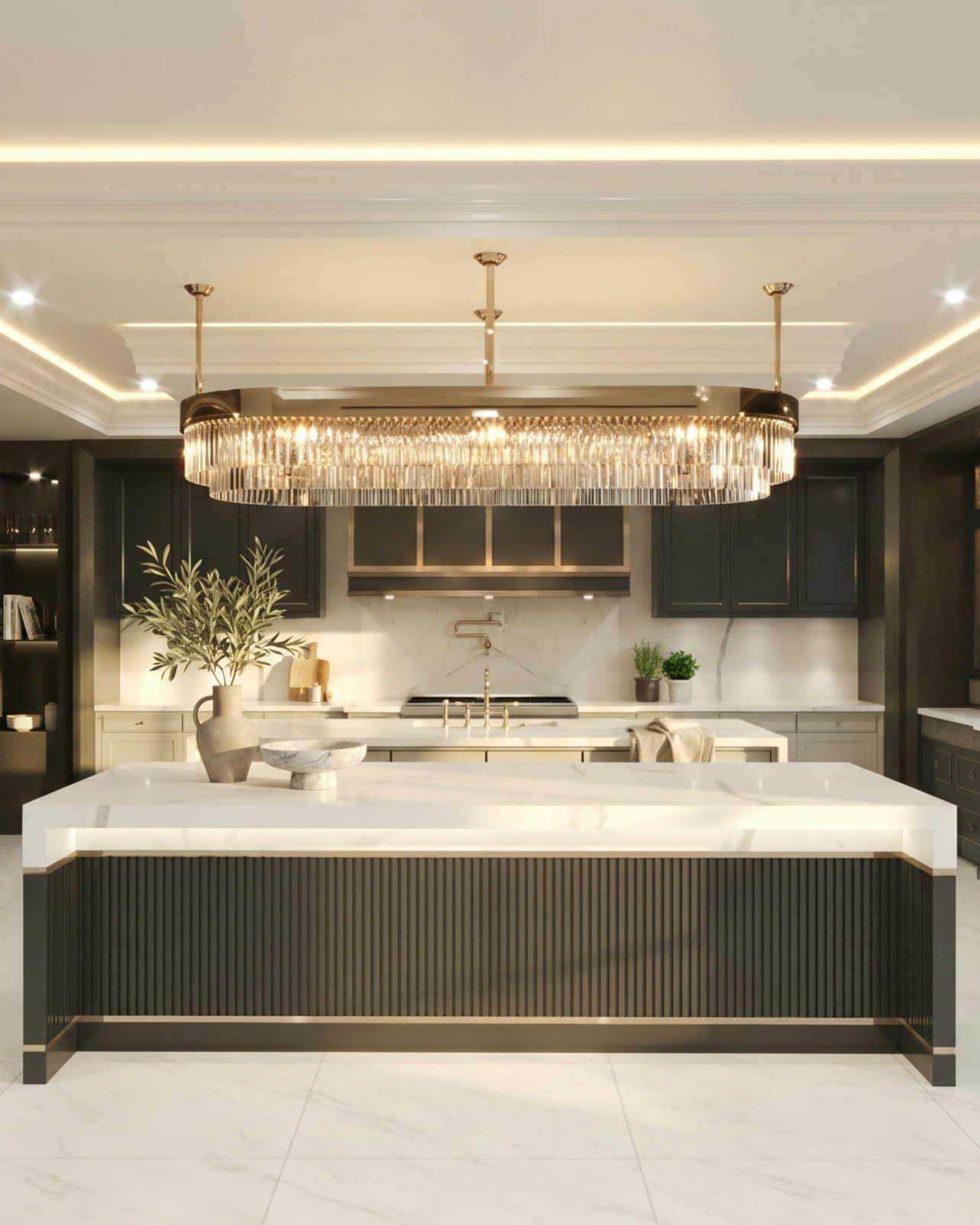
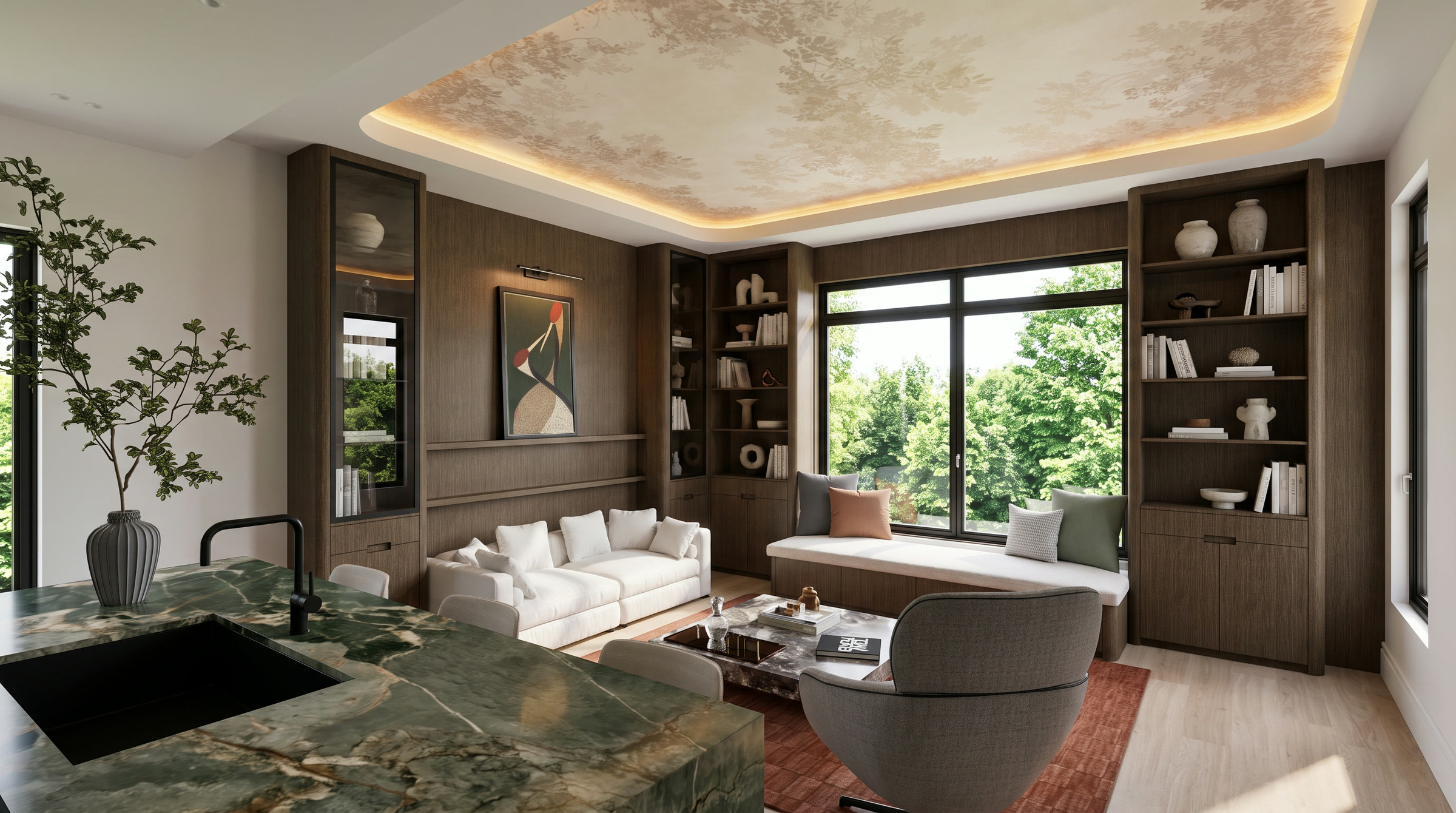
Natural stone goes where the wear is lighter and the material is meant to be seen — islands, vanities, fireplace surrounds, a range wall. At Sixth Lane that logic produced Calacatta Viola marble on the main kitchen and a deep green natural stone on the upper floor, both chosen for what they do to the room rather than for their spec sheet.
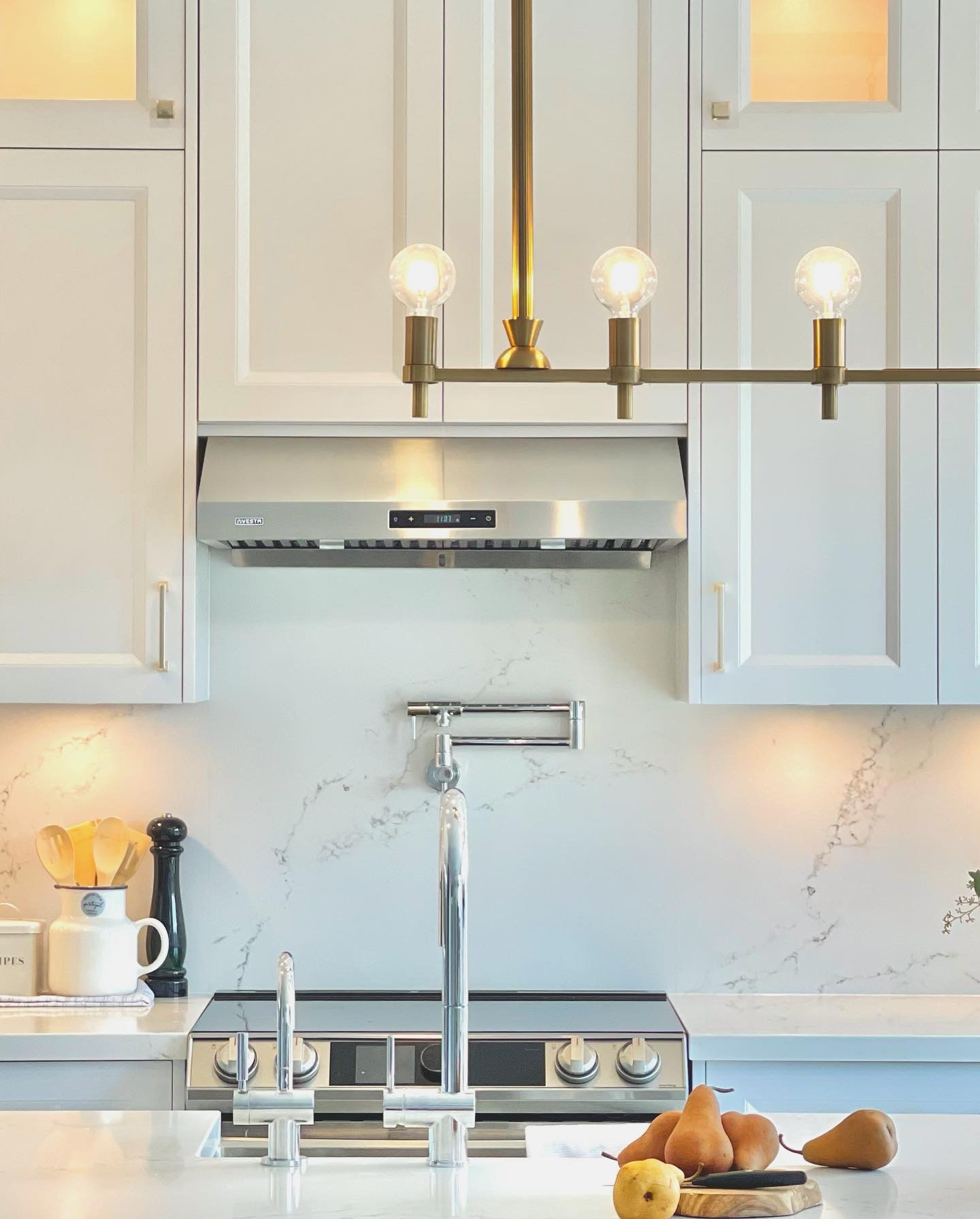
Engineered quartz goes on the surfaces that get worked hardest, especially in a busy family kitchen where nobody is going to think about a sealer. That is not a downgrade; it is the right tool. The kitchen at Rosanna runs engineered stone from the counter up the full backsplash, and nothing about it reads as a compromise.
A short way to decide
- You want marble’s look and you will maintain it — quartzite, and go and book the slab yourself.
- You want a hard, quiet counter for less — honed or leathered granite in a low-contrast colour.
- You want to stop thinking about it — engineered quartz, accepting that it will not love a hot pan.
- You are torn — split the room. Natural stone on the island where it is seen, engineered on the perimeter where it is used.
None of this is worth agonising over on its own. The counter is one decision inside a room where the cabinetry, the lighting and the backsplash all have to agree with it, and it is far easier to choose once those are drawn. That is the order we work in, and we walk through it in our process.
Common questions
Is quartzite harder than granite?
Usually, yes. Quartzite is dominated by quartz, which sits at about 7 on the Mohs scale; granite is a mix of quartz, feldspar and mica, and the softer minerals in it are what scratch first. In a kitchen the difference is small enough that neither will be marked by ordinary cooking. It matters more to the fabricator than to you.
Which one stains more easily?
Both are porous and both want a sealer. Granite is generally the more absorbent of the two, and a light granite will show an oil mark faster than a dark one. Well-sealed quartzite resists most spills, but it is not stain-proof – red wine or olive oil left overnight will still leave a shadow on either stone.
Does granite look dated now?
The speckled, high-polish slabs of the 2000s do. Granite itself does not. What changed is the finish and the pattern: honed or leathered granite in a quiet colour reads as a completely different material from the shiny golden slab people picture, and that is why the question is coming back.
Is quartzite worth the extra cost?
It is if you want the look of marble without marble’s etching. That is the whole case for it. If you are choosing on durability alone, a good granite does the same job for less, and engineered quartz does it for less again with no sealing at all.
Can I use either on an island with an overhang?
Both work, but the overhang is an engineering question rather than a material one. Anything past about 12 inches wants support, and your fabricator should confirm what the specific slab needs. We settle this at the drawing stage, before the cabinetry is ordered.